Story Highlights
- Senate advances resolution to limit presidential war powers
- Lawmakers push for greater congressional oversight on Iran actions
- Debate reflects ongoing tensions over executive authority
What Happened
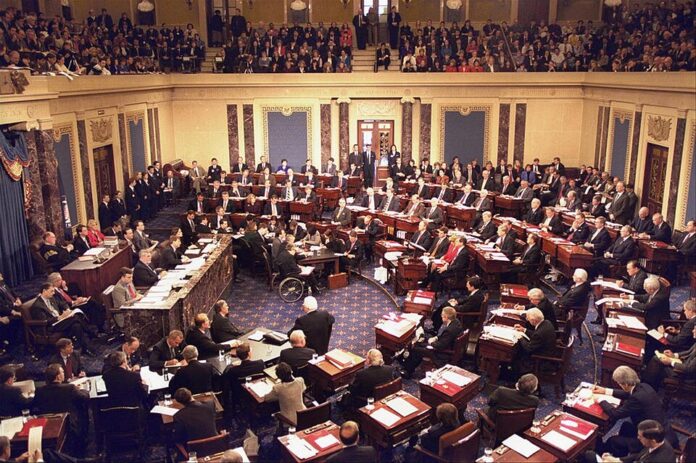
The U.S. Senate has moved forward with a resolution aimed at limiting presidential war powers in relation to Iran, signaling a renewed effort by lawmakers to assert congressional authority over military decisions. The proposal comes in the context of recent tensions between the United States and Iran, as well as the temporary ceasefire that has paused immediate escalation.
The resolution seeks to require additional approval from Congress before military action can be taken against Iran, reinforcing the legislative branch’s constitutional role in matters of war. Lawmakers supporting the measure argue that it is necessary to ensure proper oversight and prevent unilateral decisions that could lead to conflict.
Debate around the resolution has been active, with senators expressing a range of perspectives on the balance of power between the executive and legislative branches. Some have emphasized the importance of maintaining flexibility in responding to threats, while others have stressed the need for clear checks and balances.
The move follows a broader pattern of congressional efforts to reassert authority over military engagements. Similar discussions have taken place in the past, particularly in situations involving prolonged or undeclared conflicts. The current resolution reflects ongoing concerns about how decisions related to national security are made and implemented.
Why It Matters
The resolution is significant because it addresses a fundamental question in U.S. governance: the division of power between the president and Congress. Decisions about military action carry serious consequences, and ensuring that these decisions are made through a balanced process is a key aspect of the constitutional system.
By seeking to limit war powers, lawmakers are emphasizing the importance of accountability and oversight. Requiring congressional approval can provide an additional layer of scrutiny, helping to ensure that decisions are carefully considered and aligned with broader national interests.
The issue also highlights the challenges of responding to modern security threats. Rapidly changing परिस्थितियाँ may require quick action, but this must be balanced with the need for deliberation and consensus. Finding the right balance is a central challenge in shaping effective policy.
Additionally, the debate reflects broader concerns about the scope of executive authority. Over time, presidents have exercised significant control over military decisions, leading to ongoing discussions about how this authority should be defined and limited.
Political and Geopolitical Impact
Domestically, the resolution is likely to influence political discussions around foreign policy and governance. It may become a focal point for debates about executive power, legislative responsibility, and the appropriate process for making decisions related to national security.
The measure could also affect how future administrations approach military decisions. If enacted, it would establish clearer guidelines for when and how congressional approval is required, potentially shaping the decision-making process in future situations.
On the geopolitical stage, the development may be closely watched by other countries. Changes in how the United States manages military authority can influence perceptions of its decision-making processes and strategic approach. Allies and adversaries alike may consider how such measures affect the country’s ability to respond to international घटनाएँ.
The situation also underscores the importance of institutional balance in maintaining stability. Clear roles and responsibilities within government can contribute to more predictable and transparent decision-making, which is an important factor in international relations.
Implications
If the resolution gains further support and is implemented, it could lead to a more structured process for authorizing military action. This may enhance oversight and accountability, while also requiring greater coordination between branches of government.
However, the measure may also introduce challenges related to timing and responsiveness. Ensuring that decisions can be made efficiently while maintaining proper oversight will be a key consideration. Policymakers will need to balance these factors carefully.
In the longer term, the resolution could contribute to ongoing discussions about the role of Congress in foreign policy. It may serve as a reference point for future efforts to define and refine the balance of power within the U.S. government.