Story Highlights
• A bipartisan group of senators advanced legislation tightening technology export controls.
• The bill focuses on sensitive technologies linked to national security.
• Lawmakers say the move strengthens U.S. supply‑chain resilience.
What Happened
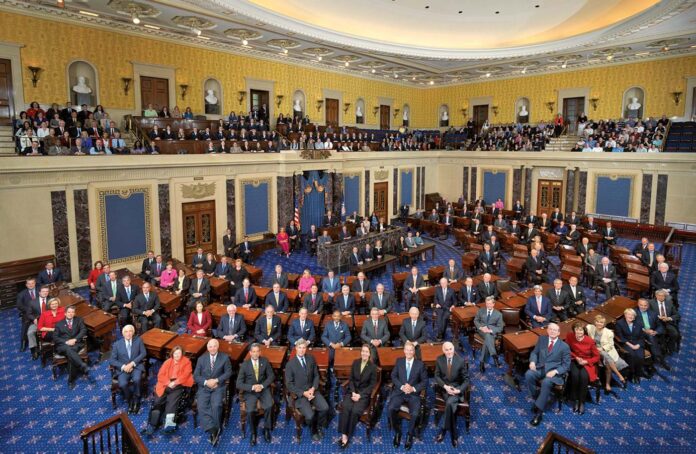
The U.S. Senate moved forward with bipartisan legislation aimed at strengthening restrictions on exports of sensitive technologies, according to reporting by the Wall Street Journal. The bill targets advanced semiconductor equipment, artificial intelligence applications, and other high‑tech components considered strategically important.
Lawmakers from both parties said the proposal is designed to prevent critical technologies from being transferred to foreign adversaries while maintaining American leadership in innovation. The legislation would expand oversight mechanisms and enhance review procedures for outbound investment in strategic sectors.
The measure now heads to further debate and potential amendments as it moves through the legislative process.
Why It Matters
Technology export controls have become a central tool in national security strategy. Restricting access to advanced chips and related systems can influence global supply chains and shape competitive dynamics in emerging industries.
For U.S. companies, tighter export rules may require additional compliance procedures and could affect international sales. At the same time, policymakers argue that safeguarding advanced technology protects long‑term innovation and economic competitiveness.
The bill reflects growing consensus in Washington that technology policy is inseparable from security considerations.
Political and Geopolitical Implications
Politically, the bipartisan support signals alignment across party lines on the need for stronger tech safeguards. While lawmakers may differ on details, there is broad agreement that sensitive technologies require enhanced scrutiny.
Geopolitically, stricter export controls could further shape relations between the U.S. and major trading partners, particularly in Asia. Countries reliant on U.S. semiconductor equipment or AI systems may reassess procurement strategies.
The legislation also highlights how economic policy and national security are increasingly intertwined in the digital age.
Implications
In the near term, companies operating in advanced manufacturing and AI sectors will monitor the bill’s progress and evaluate compliance adjustments. Markets may react to specific provisions once finalized.
Longer term, expanded export controls could influence global technology ecosystems, encouraging domestic investment while reshaping international supply chains. For now, the Senate’s action underscores a sustained focus on protecting strategic industries.