Story Highlights
Moscow cautions Washington against any new military strike on Iran.
U.S. maintains deterrence posture while keeping diplomatic channels open.
Rising tensions add pressure to already fragile regional stability.
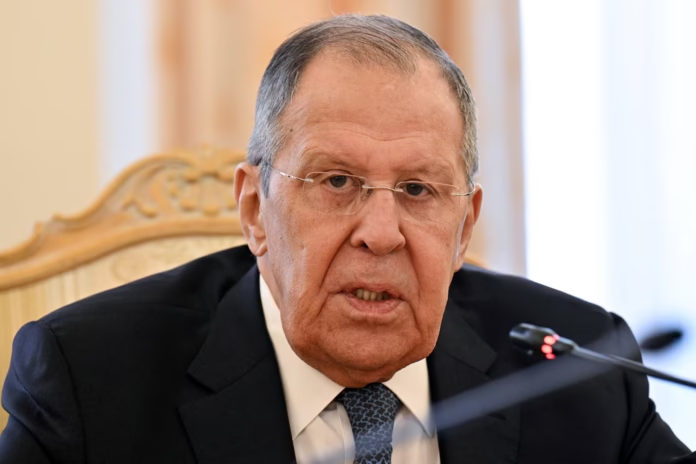
Russia’s Foreign Minister Sergei Lavrov has warned that any new U.S. strike on Iran could carry serious consequences, as tensions between Washington and Tehran continue to mount. The remarks, reported by Reuters, come amid an expanded U.S. military presence in the region and renewed global focus on Iran’s nuclear activities. Moscow emphasized the importance of diplomacy and restraint, urging all parties to avoid actions that could destabilize the broader Middle East.
The warning follows visible U.S. deployments, including naval assets and air power positioned as a deterrent against potential escalation. American officials have described the posture as defensive, intended to protect U.S. personnel and regional allies while reinforcing strategic credibility. The situation unfolds against the backdrop of long-running tensions over Iran’s nuclear enrichment program and concerns about regional proxy activity. While no direct confrontation has occurred, rhetoric from multiple capitals reflects heightened sensitivity.
Russia’s response highlights its role as both a geopolitical counterweight to Washington and a partner to Tehran in several diplomatic arenas. By publicly cautioning against military action, Moscow signals its preference for negotiated solutions while also asserting its influence in Middle Eastern affairs. The comments reflect broader great-power competition, where regional disputes intersect with global strategic rivalries.
From Washington’s perspective, maintaining deterrence without triggering escalation remains a central objective. Military positioning can serve as leverage in negotiations, but it also increases the risk of miscalculation. Both the United States and Iran have historically relied on calibrated signaling — forceful enough to demonstrate resolve, measured enough to avoid open conflict. Russia’s involvement adds another diplomatic dimension, potentially complicating or facilitating future talks depending on how events unfold.
Energy markets and international investors are closely monitoring developments. The Persian Gulf’s shipping lanes remain vital to global supply chains, and any perception of instability can influence prices and trade flows. Allied governments have reiterated the importance of de-escalation, emphasizing the need for diplomatic solutions over confrontation.
Why It Matters
The warning from Moscow underscores the interconnected nature of global security dynamics. U.S.–Iran tensions no longer exist in isolation; they are embedded within a broader strategic contest involving Russia and other global actors. Statements from senior officials, even absent immediate military action, can shift diplomatic momentum and investor sentiment.
At a time when global markets and geopolitical alliances are already under strain, restraint and clear communication are essential. Misinterpretation of military movements or political rhetoric could rapidly heighten tensions, making crisis management mechanisms crucial.
Political & Geopolitical Implications
For the United States, maintaining credibility while avoiding conflict is a delicate balance. Demonstrating strength reinforces deterrence but must be matched with diplomatic engagement to prevent unintended escalation. For Russia, public opposition to U.S. military action reinforces its image as an alternative diplomatic broker and a strategic partner to Iran.
The coming days will likely focus on whether backchannel diplomacy gains traction. If negotiations advance, the military posture may be remembered as strategic leverage. If tensions rise further, it could mark the beginning of a more prolonged geopolitical standoff.
Implications
This episode reflects the fragile equilibrium in Middle Eastern security. Clear communication and diplomatic engagement will determine whether the situation stabilizes or intensifies. With multiple global powers involved, decisions made now carry significance far beyond the immediate region.