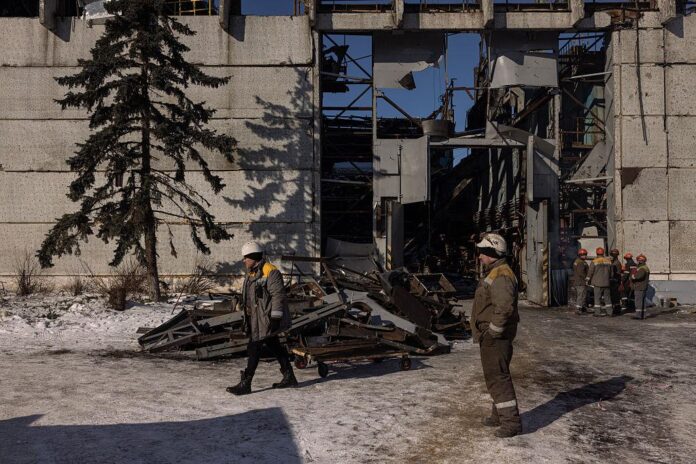
Russia launched another round of missile and drone strikes targeting energy facilities and infrastructure across Ukraine, Ukrainian officials reported Thursday. Air defense systems were activated across several regions as incoming missiles and drones approached key infrastructure sites.
Ukrainian authorities said many of the projectiles were intercepted before reaching their targets, though some energy infrastructure sustained damage, prompting emergency repair operations.
Situation Overview
According to Ukrainian defense officials, the strikes involved a combination of cruise missiles and drones launched from multiple directions. Several regions reported explosions as air defense units attempted to intercept the incoming weapons.
Energy facilities have remained frequent targets throughout the conflict as Russia attempts to disrupt electricity generation and distribution networks.
Emergency services were dispatched to affected areas to assess damage and restore power supply where possible.
Strategic Context
Targeting infrastructure has become a major element of Russia’s long-range strike strategy.
Military analysts say the objective is to weaken Ukraine’s economic resilience and complicate military logistics by disrupting energy supply networks.
The strategy typically includes:
Missile and drone strikes on power plants and substations
Attacks on rail infrastructure and logistics hubs
Sustained pressure on major cities
Attempts to strain Ukraine’s air defense resources
Ukraine has continued strengthening its air defense capabilities with assistance from Western allies.
Impact on Civilians and Infrastructure
Energy strikes can have wide-ranging consequences for civilian life.
Authorities remain concerned about potential impacts including:
Power outages in major cities
Disruptions to heating and water systems
Damage to industrial facilities
Increased strain on emergency services
Repair teams often work around the clock to restore electricity following attacks.
Global Security Implications
The Russia–Ukraine war remains a central geopolitical conflict influencing global security discussions.
Western governments have maintained sanctions on Russia and continued military assistance to Ukraine. Meanwhile, Moscow has intensified its long-range strike campaign as part of its ongoing war strategy.
Energy markets and international policymakers are closely monitoring developments in the conflict.
What Analysts Are Watching
Security analysts say several factors could shape the next phase of the conflict:
The scale and frequency of future missile strikes
Ukraine’s ability to maintain air defense coverage
Continued Western military support
Potential diplomatic initiatives aimed at reducing hostilities
Despite periodic escalation cycles, experts say the war is likely to remain prolonged.
Bottom Line
Russia’s latest strike campaign targeting Ukrainian energy infrastructure highlights how the conflict continues to evolve into a prolonged war of pressure on civilian and economic systems. With both sides adapting strategies and international involvement continuing, the war remains one of the most significant geopolitical crises affecting global stability.