Story Highlights
• Secretary of State Marco Rubio struck a more reassuring tone with European allies.
• He reaffirmed core Trump administration positions on burden‑sharing and security.
• The message aimed to steady alliances while signaling policy continuity.
What Happened
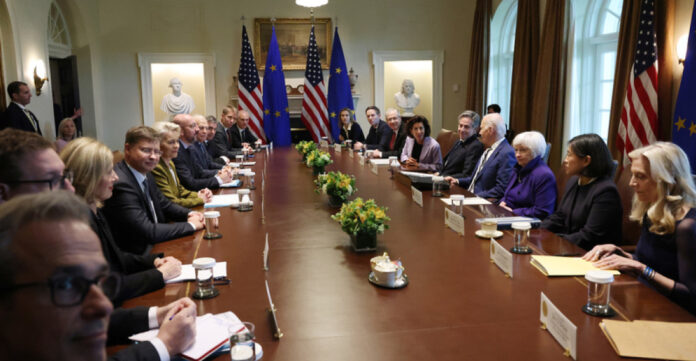
U.S. Secretary of State Marco Rubio delivered a carefully calibrated message to European allies, adopting a more conciliatory tone while maintaining the Trump administration’s firm policy positions, according to the Associated Press. Speaking during meetings with European leaders, Rubio emphasized continued U.S. engagement and alliance cooperation.
At the same time, he reiterated long‑standing U.S. expectations around defense spending, strategic responsibility, and shared commitments within NATO and broader transatlantic frameworks. Officials described the approach as one of reassurance without retreat—aimed at calming diplomatic tensions while reinforcing U.S. priorities.
The speech comes amid heightened sensitivity in Europe about Washington’s future role in regional security and global diplomacy.
Why It Matters
U.S.–Europe relations underpin global security, trade, and diplomatic coordination. Tone matters as much as policy substance, particularly during periods of geopolitical uncertainty.
By softening rhetoric while maintaining firm positions, the administration signaled stability without signaling policy reversal. Supporters argue this approach reduces friction while keeping pressure on allies to meet defense and security commitments.
Markets and international institutions often respond positively to diplomatic predictability, especially when major alliances are involved.
Political and Geopolitical Implications
Politically, Rubio’s remarks reflect the Trump administration’s broader strategy: strong alliances paired with clear expectations. Supporters see the approach as pragmatic—reinforcing cooperation without diluting U.S. leverage.
Geopolitically, reassurance helps counter narratives of U.S. disengagement while maintaining a tough stance on issues like defense burden‑sharing and strategic autonomy. European leaders are likely to weigh the tone as a signal of how Washington plans to manage alliances going forward.
The balance between firmness and reassurance may shape future negotiations on security, trade, and regional stability.
Implications
In the near term, the speech may ease diplomatic tensions and stabilize working relationships with European partners. Follow‑up meetings and policy coordination will test how rhetoric translates into action.
Longer term, consistent messaging could reinforce alliance structures while preserving U.S. negotiating leverage. For now, Rubio’s remarks suggest continuity—steady engagement paired with clearly defined expectations.
Source
Rubio’s speech to European allies takes a softer tone but sticks to Trump’s firm stance