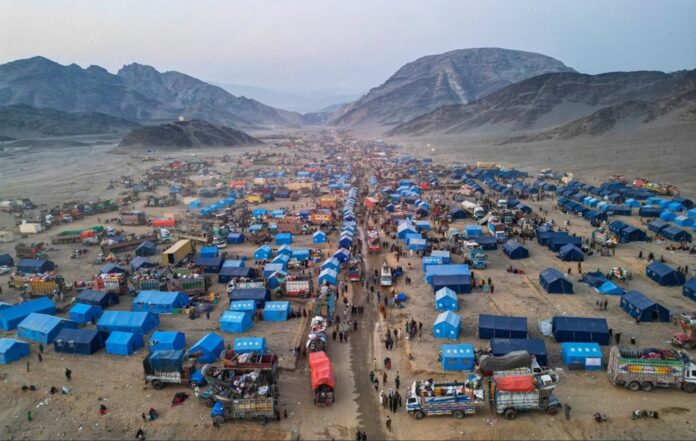
In August 2025, Pakistan intensified its controversial “Illegal Foreigners Repatriation Plan”, forcing more than one million Afghan nationals to leave the country since 2023. The mass deportations have triggered a humanitarian crisis, strained relations with Afghanistan, and drawn sharp international condemnation.
The Crackdown
Authorities launched the campaign in 2023, targeting nearly 1.7 million undocumented Afghans living in Pakistan. Many had fled decades of war, drought, and Taliban repression.
The August 2025 directive escalated the effort: officials revoked residence permits and Afghan Citizen Cards, ordering immediate evacuations in regions near the Afghan border. Thousands rushed to cross at Chaman, one of the busiest gateways between the two countries.
Officials defended the policy as a national security measure, claiming militant infiltration and smuggling networks were hidden among refugee populations in Balochistan and Khyber Pakhtunkhwa. For Islamabad, the message was blunt: “secure borders before global criticism.”
Humanitarian Outcry
The crackdown sparked outrage from humanitarian groups. The United Nations High Commissioner for Refugees (UNHCR), Amnesty International, and Human Rights Watch accused Pakistan of violating the principle of non-refoulement—the ban on returning people to places where they face persecution.
Many of the expelled Afghans are women’s rights activists, journalists, and people linked to Western forces, now at extreme risk under Taliban rule. Aid agencies reported that camps inside Afghanistan were overcrowded, under-supplied, and unable to absorb returnees.
The Taliban government itself criticized Pakistan’s actions, warning that mass deportations were destabilizing Afghanistan’s fragile economy and security.
Iran Joins the Push
Adding to the crisis, Iran has also expelled more than 1.5 million Afghans since early 2025, citing economic pressures and security risks. Together, Pakistan and Iran’s actions have created a regional domino effect, squeezing millions of Afghans with few options left.
Both countries argue that hosting refugees has become unsustainable amid food inflation, unemployment, and political strain. Unlike Western countries, where immigration policies are debated over years, Islamabad and Tehran acted swiftly and forcefully.
Regional and Global Impact
Analysts warn the deportations could trigger a second refugee wave, this time pushing Afghans toward Central Asia, Europe, and beyond. Already, humanitarian corridors are overwhelmed, with reports of families disappearing upon return.
The expulsions also highlight growing rifts between Afghanistan and its neighbors. Pakistan accuses Kabul of harboring militants, while the Taliban accuses Islamabad of punishing civilians.
For the international community, the deportations are a test of how far refugee protections can be eroded in the face of regional politics.
https://x.com/AlJazeera/status/1821568392007712841
Voices of the Displaced
One Afghan woman, deported after 20 years in Pakistan, told reporters: “I was born there. My children were born there. And yet, overnight, we were no longer allowed to call it home.”
Stories like hers underscore the human toll behind the statistics: families uprooted, livelihoods destroyed, and children left without schools or healthcare.
Final Thoughts
Pakistan’s sweeping expulsion of Afghans represents one of the largest forced population movements in recent decades. While officials frame it as a security imperative, the humanitarian cost is undeniable.
With Iran pursuing similar policies and Afghanistan ill-prepared to absorb returnees, the crisis could spill over into neighboring regions—testing the limits of refugee protections and the resolve of the international community.