

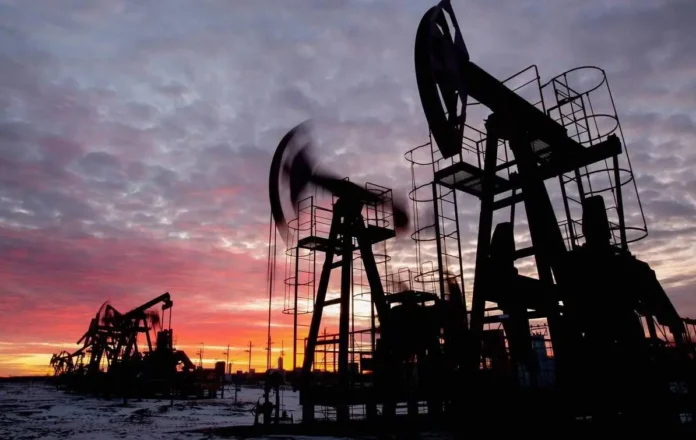
Story Highlights
• Oil prices rose modestly as investors assessed new U.S. tariff risks.
• A weaker dollar provided additional support to crude prices.
• Markets remained cautious amid uncertainty over trade policy.
What Happened
Oil prices edged higher as investors weighed the potential impact of new U.S. tariff threats on global economic growth, according to Reuters. Benchmark crude prices posted modest gains, supported by a weaker U.S. dollar and expectations that supply conditions would remain relatively tight in the near term.
Market participants said trading was cautious, with investors balancing concerns that escalating trade tensions could dampen demand against factors supporting prices, including geopolitical risks and ongoing production discipline by major oil producers. Energy markets have been particularly sensitive to policy signals that could affect global trade and industrial activity.
The price movement came as broader financial markets reacted to uncertainty around U.S. trade policy and its potential spillover effects on commodities, currencies, and growth expectations.
Why It Matters
Oil prices play a critical role in shaping inflation, transportation costs, and overall economic activity. Even modest moves can influence fuel prices for consumers and costs for businesses across industries.
Tariff uncertainty adds another layer of risk for energy markets, as trade disputes can slow economic growth and reduce demand for oil. At the same time, supply‑side factors and currency movements can offset some of that pressure, leading to choppy trading conditions.
Political and Geopolitical Implications
Politically, oil market reactions highlight how trade policy decisions can have immediate consequences beyond traditional manufacturing sectors. Energy prices often serve as a barometer for broader economic sentiment and policy risk.
Geopolitically, oil remains closely tied to global stability. Shifts in demand expectations linked to trade disputes can influence the strategies of major producers and exporting nations, potentially affecting energy diplomacy and production decisions.
Implications
If trade tensions intensify, analysts say oil markets could face renewed downside pressure from weaker demand expectations. Conversely, any easing of tariff risks or clarity on trade policy could support prices. For now, investors are likely to remain cautious, watching policy developments closely for signals that could drive the next move in energy markets.
Source
- Oil prices edge up as investors assess U.S. tariff risks — Reuters, Jan. 20 2026


