Story Highlights
Nigeria confirmed it coordinated with U.S. forces on Christmas‑Day airstrikes targeting ISIS militants.
Officials said cooperation prevented the need for unilateral action.
The operation highlights deepening U.S.–Nigeria security ties.
What Happened
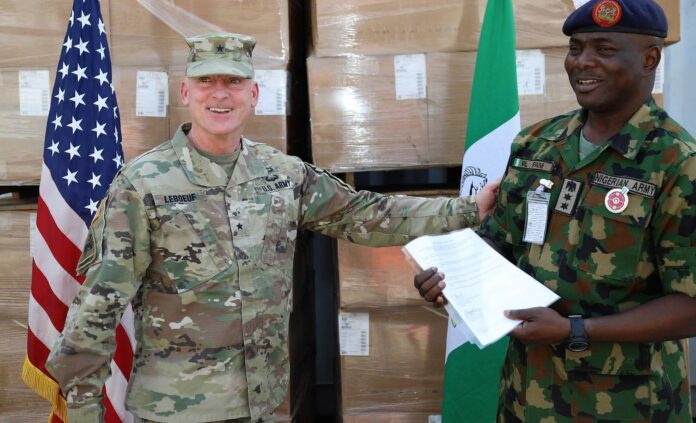
Nigeria’s government confirmed that it formally coordinated with U.S. military forces during Christmas‑Day airstrikes that targeted Islamic State–linked militants in the country’s northwest. The confirmation followed international attention after U.S. officials disclosed the operation, which was aimed at extremist cells accused of killing civilians and threatening religious communities. Nigerian authorities emphasized that the action was conducted jointly, not unilaterally, and was part of an ongoing security partnership.
According to Nigerian defense officials, the cooperation included intelligence sharing, airspace coordination, and post‑strike assessments to verify militant activity. By publicly acknowledging the operation, Nigeria signaled a willingness to strengthen transparency around foreign security cooperation — a sensitive topic in a country where sovereignty concerns and public trust in institutions remain politically important.
U.S. officials described the mission as part of a broader effort to degrade ISIS‑linked networks that have expanded across West Africa in recent years. These groups exploit remote terrain, weak border enforcement, and economic hardship to recruit fighters and stage attacks. Coordinated strikes are intended to disrupt leadership structures and reduce the ability of militants to regroup.
Why It Matters
This confirmation matters because it strengthens the legitimacy of the operation and reinforces U.S.–Nigeria defense ties. In regions affected by insurgency, cooperation with international partners can significantly improve surveillance, rapid response, and counter‑terror intelligence capabilities.
For Nigeria, public cooperation with the U.S. provides access to advanced military technology, training, and intelligence while sharing responsibility for security outcomes. For the United States, working through formal partnerships reduces political risk and increases operational effectiveness, ensuring counterterror actions are aligned with sovereign governments rather than appearing externally imposed.
The acknowledgment also reassures regional partners that the U.S. remains committed to African security engagement at a time when extremist violence continues to displace civilians and destabilize fragile economies.
Political and Geopolitical Implications
Geopolitically, Nigeria’s confirmation sends a message to rival powers expanding influence in Africa that the U.S. remains a reliable security partner. Continued cooperation may encourage neighboring states to deepen intelligence sharing, strengthening regional counterterrorism frameworks.
Politically, the transparency helps reinforce domestic accountability by demonstrating that operations were conducted with national consent. This is particularly significant in West Africa, where foreign military involvement can quickly become controversial.
For Washington, joint operations reinforce a broader strategic approach: engaging through partnerships rather than prolonged troop deployments, while maintaining pressure on extremist networks.
Implications
If cooperation continues, U.S.–Nigeria counterterror partnerships could become a central pillar of West African security strategy, limiting extremist expansion and strengthening regional stability.