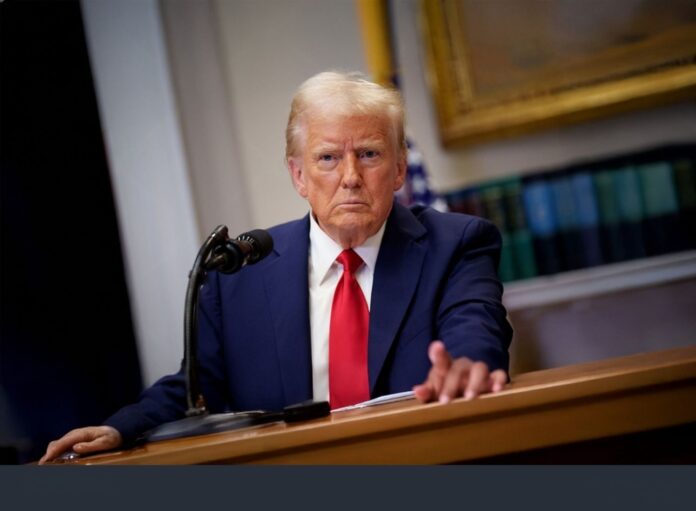
President Donald Trump has announced a new federal initiative in Memphis, Tennessee, deploying additional law enforcement personnel and resources to target violent crime. The effort, which he labeled the “Memphis Safe Task Force,” is framed as part of a broader strategy to confront crime in major U.S. cities. During the announcement, Trump signaled that Chicago could be the next target of a similar federal surge.
What Happened
At a press briefing, Trump said violent crime in Memphis had reached “unacceptable levels,” pointing to recent statistics showing rising homicides and gang-related activity. The initiative includes:
Deploying federal agents from the FBI, DEA, and ATF to support local police.
Increased funding for task forces tackling illegal guns and narcotics trafficking.
Expanded federal prosecution of gang-related offenses.
Trump described the plan as a “model” that could be applied to other cities experiencing violent crime.
Why Memphis?
Memphis has long struggled with high violent crime rates compared with other U.S. metro areas. Local officials report a troubling rise in gun-related homicides, with community leaders pointing to poverty, gang activity, and drug trafficking as root causes. Trump, however, cast the crisis as evidence of “local leadership failures” and said federal involvement is necessary to restore safety.
Why It Matters
The move is part of Trump’s broader “law and order” agenda, which has become a centerpiece of his presidency. By spotlighting crime in specific cities, he is not only deploying resources but also drawing attention to political battles over policing, public safety, and federal authority.
For critics, this represents federal overreach—raising fears that Washington is taking control of local law enforcement decisions. For supporters, it shows decisive leadership and a willingness to confront crime directly.
Reaction in Memphis and Beyond
Local leaders had mixed responses. Memphis Mayor Paul Young welcomed additional resources but emphasized the importance of community-based solutions. Civil rights advocates, meanwhile, warned that a heavy federal presence could strain relationships between law enforcement and minority neighborhoods already distrustful of policing.
Chicago leaders reacted cautiously to Trump’s warning that their city could be “next.” Some said the focus should be on funding jobs and social services, not just deploying agents. Others welcomed the possibility of extra federal help if crime continues to rise.
Political Undertones
Observers note that Trump’s city-by-city crackdowns are not just about crime—they also serve as political messaging. Memphis, a city with a large Black population and a Democratic-leaning electorate, becomes the latest stage for Trump’s “tough on crime” narrative. By hinting at Chicago, another Democrat-run city, Trump is reinforcing a familiar theme: positioning himself as the one willing to act where local Democratic leaders “fail.”
What’s Next
Implementation: Federal agents are expected to begin joint operations with Memphis police in the coming weeks.
Chicago Decision: Whether Chicago will face a similar surge may depend on crime statistics and political negotiations.
Public Perception: The success or failure of the Memphis surge could shape public attitudes toward Trump’s law-and-order strategy ahead of key policy debates.
Legal Questions: Critics are already asking whether this level of federal involvement undermines local control.
Sources
- Reuters
- AP News
- NBC News