Story Highlights
U.S. stock markets surged as oil prices eased after recent volatility.
Investor sentiment improved amid expectations of limited escalation in global tensions.
Rally highlights how energy markets continue to influence broader financial conditions.
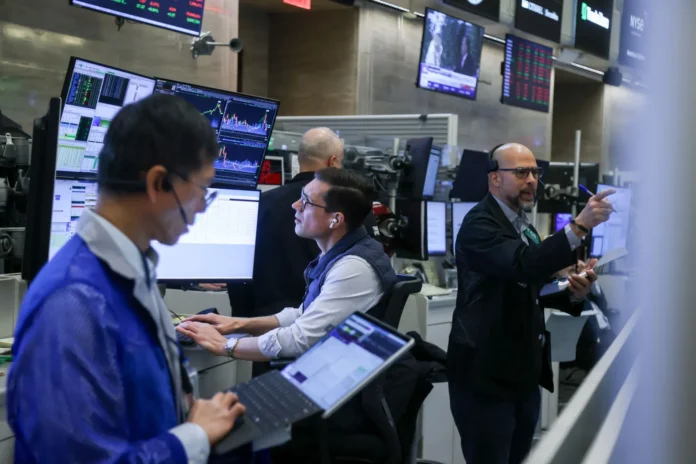
U.S. financial markets staged a strong rally, with major indices posting significant gains as oil prices retreated from recent highs. According to reporting from Associated Press, the Dow Jones Industrial Average surged sharply, reflecting renewed investor optimism following a period of heightened geopolitical uncertainty. The rebound came as energy markets showed signs of stabilization, easing concerns about sustained inflationary pressure.
The rally underscores the close relationship between energy prices and broader market sentiment. In recent weeks, rising oil prices had contributed to volatility across equities, as investors weighed the potential impact on inflation, corporate margins, and consumer spending. When oil prices eased, it signaled a possible reduction in immediate economic pressure, prompting a shift toward risk-taking in financial markets. Sectors sensitive to energy costs, including transportation, manufacturing, and consumer discretionary, saw notable gains.
From an economic perspective, the movement reflects how quickly sentiment can shift in response to external factors. Markets are highly sensitive to changes in expectations, particularly when those changes affect key variables such as energy costs. Lower oil prices can translate into reduced input costs for businesses and lower fuel expenses for consumers, both of which support economic activity. While the rally does not necessarily indicate a long-term trend, it highlights the importance of energy dynamics in shaping short-term market behavior.
Investor expectations also played a key role. The easing in oil prices was interpreted as a signal that geopolitical tensions may not escalate further in the near term. Even partial stabilization can reduce uncertainty, which is one of the primary drivers of market volatility. When uncertainty declines, investors are more willing to allocate capital toward equities, driving prices higher. This dynamic is particularly evident during periods of rapid news-driven market shifts.
The rally extended across multiple sectors, reflecting broad-based optimism rather than isolated gains. Technology, industrials, and financial stocks all participated in the upward movement, suggesting that investors were reassessing overall economic risk rather than reacting to a single industry factor. Such widespread participation often indicates a more durable shift in sentiment, though it remains dependent on continued stability in underlying conditions.
Monetary policy considerations also remain in focus. The Federal Reserve continues to monitor inflation trends closely, and energy prices are a significant component of that analysis. A sustained decline in oil prices could support arguments for maintaining or adjusting current interest rate levels, depending on broader economic data. Markets often anticipate these policy shifts, incorporating expectations into asset pricing.
Globally, the interplay between energy markets and financial systems is particularly pronounced. Oil prices are influenced by geopolitical developments, production decisions, and demand patterns, all of which have ripple effects across economies. The recent easing suggests that supply concerns may be stabilizing, at least temporarily. However, analysts caution that energy markets can remain volatile, especially in uncertain geopolitical environments.
The rally also highlights the resilience of U.S. markets. Despite periods of volatility, the underlying structure of the financial system allows for rapid recovery when conditions improve. Investor confidence, liquidity, and diversified sector participation all contribute to this resilience. However, sustained performance will depend on a combination of factors, including corporate earnings, economic data, and global stability.
At the same time, analysts emphasize that short-term rallies should be interpreted cautiously. Market movements driven by external factors can reverse quickly if conditions change. While lower oil prices provided immediate relief, the broader economic environment remains complex. Inflation, interest rates, and global developments will continue to shape market direction in the coming months.
From a behavioral standpoint, the rally reflects how markets process information. Investors continuously reassess risk based on new data, adjusting positions accordingly. When key concerns — such as energy price spikes — begin to ease, it creates an opportunity for reentry into equities. This cycle of uncertainty and adjustment is a defining feature of modern financial markets.
Why It Matters
Market rallies driven by energy price shifts highlight the interconnected nature of global economics. Changes in oil prices can quickly influence inflation expectations, consumer behavior, and corporate performance.
For investors, understanding these relationships is critical for navigating volatility. For policymakers, energy trends provide important signals about broader economic conditions.
Political & Geopolitical Implications
Domestically, market performance can influence public perception of economic stability and policy effectiveness. Strong equity gains often reinforce confidence, even if driven by short-term factors.
Geopolitically, energy markets remain closely tied to international developments. Stability in oil prices can reduce tension in global markets, while volatility can amplify uncertainty across regions.
Implications
The recent market rally reflects a temporary easing of key economic pressures rather than a definitive shift in long-term trends. While lower oil prices provided immediate support, the sustainability of gains will depend on continued stability in both energy markets and broader economic conditions. For now, the rebound underscores the responsiveness of financial markets to changes in global risk dynamics.