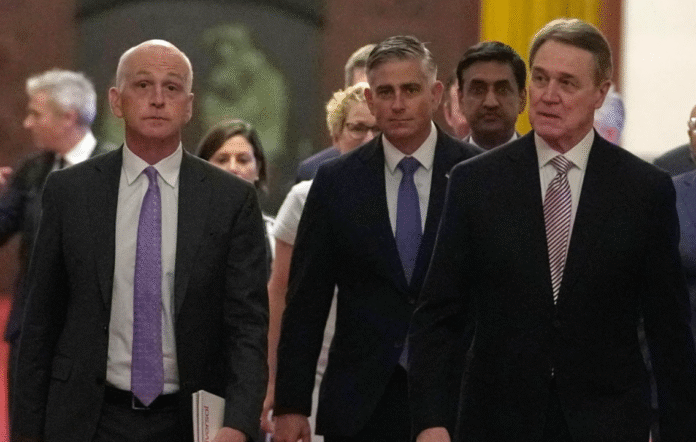
For the first time in six years, a bipartisan U.S. House delegation traveled to Beijing, signaling an effort to stabilize relations between Washington and China. The visit, announced on September 21, 2025, comes at a time of rising trade disputes, military tensions in the South China Sea, and domestic pressure on both governments to avoid escalation. While largely symbolic, the trip is being closely watched as a potential step toward reopening channels of communication that have been frozen since the Trump administration took office.
What Happened
The delegation included senior members from both parties, representing committees on foreign affairs, trade, and defense. In meetings with Chinese officials, the lawmakers discussed economic cooperation, fentanyl trafficking, and regional security issues. The trip marked the first congressional delegation to China since 2019, breaking a long hiatus fueled by the COVID-19 pandemic and worsening diplomatic friction.
Lawmakers emphasized that the visit was exploratory, not a negotiation. Still, the fact that Beijing hosted the group was seen as a gesture of willingness to re-engage.
Why It Matters
The U.S.–China relationship is widely viewed as the most consequential in global politics today. Trade between the two countries tops $700 billion annually, but disputes over tariffs, technology, and human rights continue to strain ties.
For the Trump administration, the trip represents a test of its approach: maintaining tough rhetoric while leaving the door open for dialogue. For China, the visit provides an opportunity to ease investor anxiety and signal that cooperation with Washington is still possible.
Experts say even a modest thaw could help stabilize markets and reduce the risk of accidental confrontation in hotspots like the Taiwan Strait.
Reactions
In Washington, the visit drew cautious praise. Business groups welcomed any sign of reduced tension, particularly with supply chains still fragile. Republican allies of Trump stressed that the trip should not be seen as “softening” the administration’s stance, but rather as “responsible engagement.”
In Beijing, state media portrayed the meetings as a breakthrough, framing the visit as evidence that the U.S. recognizes China’s global importance. However, officials reiterated their opposition to U.S. tariffs and military maneuvers in the Pacific.
Analysts noted that expectations were deliberately kept low. The goal was not to produce dramatic agreements, but to reopen communication lines and prevent further deterioration.
What’s Next
Follow-up Talks: Both sides indicated interest in continuing exchanges, possibly involving cabinet-level officials later this year.
Trade Policy: Observers are watching to see if tariff negotiations restart, especially as Trump presses China over alleged unfair practices.
Security Risks: The South China Sea and Taiwan remain flashpoints where miscalculation could undo diplomatic gains.
Political Timing: With U.S. elections approaching, Trump may use the visit to claim credit for keeping China “in check” while still leaving space for compromise.
While no breakthroughs emerged from the visit, the very act of dialogue marks a notable shift in tone at a critical juncture.
Source
- Reuters
- AP News
- PBS NewsHour