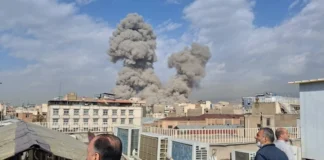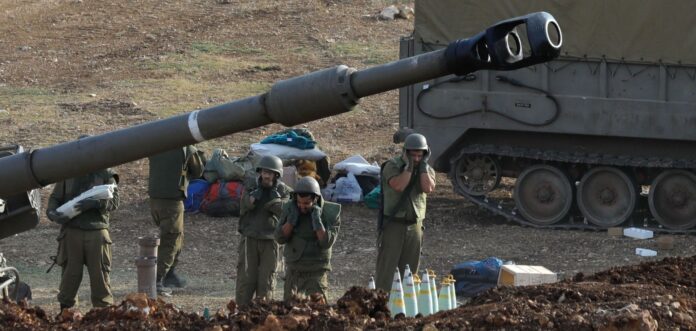
Israel launched artillery and airstrikes against positions linked to Hezbollah in southern Lebanon after a fresh round of cross-border rocket fire heightened tensions along one of the Middle East’s most volatile front lines. Israeli defense officials said the strikes targeted launch sites and militant infrastructure after rockets were fired toward northern Israeli communities.
Air raid sirens were activated in several border towns as Israeli air defense systems intercepted incoming projectiles. Military officials reported that multiple rockets were destroyed mid-air, while others landed in open areas without causing major damage.
The exchange underscores how the Israel-Iran regional confrontation increasingly involves allied militant groups across multiple fronts, raising concerns among security analysts about the potential for wider escalation.
Situation Overview
According to Israeli military officials, rockets were launched from southern Lebanon toward communities in northern Israel during the early hours of the morning. Shortly after the launch, Israeli forces responded with artillery fire and airstrikes targeting areas believed to be used by Hezbollah militants.
Israeli officials stated that the strikes focused on launch infrastructure and militant observation points. Residents in several border regions were advised to remain near shelters as the situation unfolded.
Hezbollah has not immediately confirmed responsibility for the rocket launches, though Israeli intelligence assessments indicate the attacks originated from areas where the group operates.
Strategic Context
Hezbollah, a powerful militant organization based in Lebanon and supported by Iran, has long been a central factor in Israel’s regional security calculations. The group possesses a large arsenal of rockets and missiles capable of reaching deep into Israeli territory.
Security analysts say Israel maintains a policy of rapid retaliation against cross-border attacks in order to deter further escalation.
The Israel–Hezbollah front has remained relatively tense since the Gaza conflict intensified regional tensions, with periodic exchanges of fire along the border.
Regional Implications
Military observers warn that even limited clashes along the Israel-Lebanon frontier can quickly escalate due to the large number of weapons deployed on both sides.
Key concerns include:
Larger rocket barrages targeting Israeli cities
Expanded Israeli air operations inside Lebanon
Iranian-aligned groups joining the confrontation
Increased military mobilization along the border
The border region remains heavily militarized, with both sides maintaining high levels of readiness.
International Reactions
Diplomatic officials have urged restraint as tensions rise.
Several Western governments have reiterated support for Israel’s right to defend itself while also encouraging efforts to avoid a broader regional war. International organizations have warned that escalation between Israel and Hezbollah could destabilize the entire region.
Energy markets and geopolitical analysts are closely watching the situation because large-scale conflict in the Middle East can quickly affect global oil markets and international security dynamics.
What Analysts Are Watching
Security experts say several developments could determine the direction of the situation:
Whether Hezbollah launches additional rocket attacks
Expanded Israeli military operations in southern Lebanon
Increased involvement of Iran-aligned groups across the region
Diplomatic efforts aimed at preventing wider escalation
While the latest exchange remained limited in scope, analysts warn that miscalculation along the border could rapidly escalate into a larger confrontation.
Bottom Line
The latest exchange between Israel and Hezbollah highlights how fragile the security environment remains across the Middle East. With multiple regional flashpoints already active, even limited clashes along the Israel-Lebanon border have the potential to trigger broader geopolitical consequences.