The Veteran Disquiet
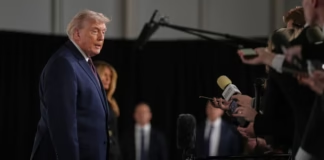
In recent months, former President Donald Trump has adopted a new war-centric rhetoric that is causing ripples of concern among the nation’s veterans. This messaging, which intertwines traditional patriotic themes with an aggressive stance, is seen by many as a deviation from the usual political discourse surrounding military service and sacrifice. Veterans, who have historically been viewed as a steadfast demographic for Trump, are now expressing unease over a narrative they perceive as both novel and unsettling.
The Florida Shockwave
Trump’s latest messaging strategy has emerged as a significant point of discussion within political circles. Traditionally, political figures have used military themes to evoke a sense of unity and national pride. However, Trump’s rhetoric appears to pivot towards a combative and divisive tone, drawing on themes of conflict and battle readiness. This shift is particularly pronounced in his speeches and public appearances in key states like Florida, where he has a substantial support base among veterans.
Political analysts note that this strategy might be a calculated move to galvanize a specific segment of the electorate, tapping into sentiments of patriotism and defense readiness that resonate deeply within American culture. However, the implications of this approach are multi-faceted, and not all of them are advantageous for Trump’s political ambitions.
In Trump’s war messaging, veterans see something new — and disturbing via @drewharwell @washingtonpost https://t.co/RuaOZgxUbV
— Patricia Kime (@patriciakime) March 25, 2026
Strategic Fallout for 2024
- Electoral Risk: While this messaging might energize a certain segment of his base, it risks alienating moderate veterans who appreciate a more nuanced approach to military issues.
- Public Perception: The aggressive tone may be perceived as undermining the valor and solemnity traditionally associated with military service.
- Policy Implications: This approach could complicate Trump’s ability to craft comprehensive foreign policy stances, as simplistic war rhetoric may not translate effectively into nuanced policy discussions.
- Veteran Support: There’s potential for a rift within veteran communities, where Trump’s rhetoric might be seen as exploitative rather than supportive.
GOP’s Identity Crisis
- Party Dynamics: Trump’s war-centric messaging could exacerbate existing tensions within the Republican Party, where there is already a struggle between traditional conservatism and Trump’s brand of populism.
- Military-Civil Divide: The rhetoric may deepen the divide between military and civilian perspectives on national security and defense, complicating bipartisan support for defense-related policies.
- Media Scrutiny: Increased media attention on Trump’s statements could lead to heightened scrutiny of his past military-related policies and actions, influencing public opinion.
- Veterans’ Advocacy Groups: These organizations might increase their efforts to counteract what they see as harmful narratives, potentially swaying veteran votes away from Trump.
Strategic Fallout for 2024
Looking ahead, Trump’s war messaging could have significant implications for the 2024 election landscape. Analysts predict that if this rhetoric continues, it may force other Republican candidates to either align with or distance themselves from this approach. The public’s reaction remains mixed, with some applauding Trump’s boldness and others cautioning against the potential dangers of such a narrative.
As the election cycle intensifies, it will be crucial to monitor how Trump’s strategy evolves and how it resonates with the broader veteran community. The potential for this rhetoric to either bolster or erode Trump’s support among veterans will be a critical factor in determining the effectiveness of his campaign strategy.