Story Highlights
Supreme Court rules emergency law cannot justify sweeping global tariffs.
Decision seen as major legal setback for executive trade authority.
Congress expected to play larger role in future tariff actions.
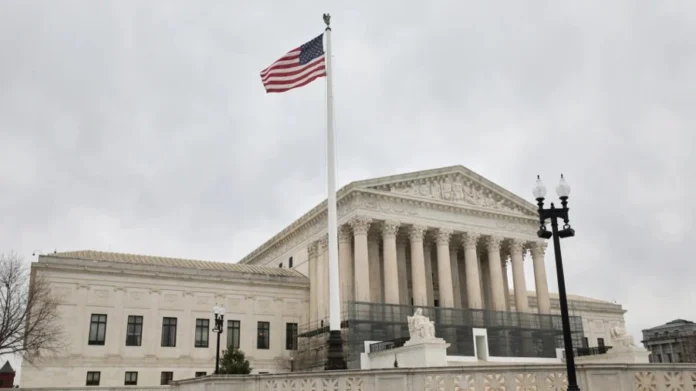
The Supreme Court of the United States has ruled that a 1977 emergency powers statute cannot be used to impose sweeping global tariffs without explicit congressional authorization. The 6–3 decision, covered by The Washington Post, marks a pivotal clarification of how far executive authority extends in trade matters. The ruling centers not on trade policy itself, but on constitutional separation of powers.
The case examined whether former President Donald Trump could rely on the International Emergency Economic Powers Act to justify broad tariffs on foreign imports. The majority opinion concluded that while the president retains authority to respond to specific economic threats, Congress did not clearly grant permission for blanket global trade restrictions under that statute. The decision reinforces legislative primacy in shaping national trade policy.
Legal scholars describe the ruling as one of the most significant trade-related constitutional decisions in years. It narrows the scope of emergency economic authority and signals that courts may more carefully scrutinize expansive interpretations of executive power. While the tariffs in question had already reshaped supply chains and pricing structures, the ruling now places future large-scale tariff measures firmly within Congress’s domain.
Markets reacted cautiously as analysts evaluated what the decision means for trade stability. Businesses that faced uncertainty under fluctuating tariff regimes may welcome clearer rules of engagement. However, some domestic industries that had benefited from protective measures could now face renewed competition absent legislative action.
Why It Matters
The decision reinforces a central constitutional principle: Congress controls taxation and trade. By clarifying limits on executive authority, the Court reduces ambiguity around emergency economic powers. That clarity may bring greater predictability to U.S. trade policy, particularly for multinational firms and global investors.
Trade policy shapes supply chains, consumer prices, and diplomatic leverage. When authority is clearly defined, companies can plan long‑term investments with greater confidence. Conversely, rapid shifts in tariff regimes can disrupt markets. The ruling may therefore contribute to longer-term economic stability, even as policymakers debate next steps.
Political & Geopolitical Implications
Politically, the decision could prompt bipartisan negotiations over updating trade statutes. Lawmakers who support robust tariff tools may seek clearer legislative authorization, while others may advocate narrower trade enforcement mechanisms. The ruling effectively shifts the conversation from executive discretion to legislative compromise.
Internationally, trading partners are likely to view the decision as evidence of institutional checks within the U.S. system. A more predictable trade framework could ease diplomatic tensions in ongoing negotiations. However, the absence of swift unilateral tariff authority may also limit rapid response options during future trade disputes.
The case also signals the Court’s broader posture on executive power. By reaffirming congressional authority in economic matters, the majority opinion contributes to ongoing debates about constitutional balance in areas ranging from trade to national security.
Implications
The Supreme Court’s decision redefines the legal boundaries of emergency trade powers and restores Congress to the forefront of tariff policymaking. While it curtails unilateral action in the short term, it may encourage more durable and bipartisan trade frameworks in the long run. The path forward will depend on whether lawmakers choose to expand, clarify, or constrain tariff authority through new legislation.
Sources
Supreme Court rules emergency law cannot justify sweeping tariffs