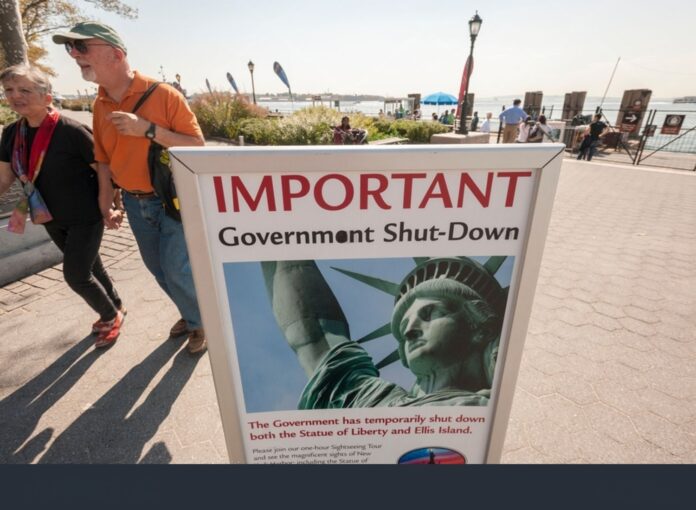
What Happened
The federal government has begun its first wave of layoffs as the shutdown enters its third week, marking a critical turning point in the budget standoff that has frozen Washington.
According to the Office of Management and Budget (OMB), thousands of temporary and contract workers across multiple departments have already been released, with more reductions expected in the coming days.
Essential services—such as air traffic control, border security, and emergency response—remain staffed.
But programs related to education, housing, and small-business support have been hit hardest.
Many agencies report that contracted janitorial, IT, and research personnel are now fully out of work, as agencies can no longer legally issue payments without congressional authorization.
Federal departments have been instructed to consolidate duties and “suspend all non-critical operations.” For many workers, that means indefinite furloughs turning into job losses.
Why It Matters
This development transforms the shutdown from a temporary freeze into a structural disruption.
For the first time in recent memory, government employees may permanently lose positions due to budget impasse fallout.
Economists estimate that if layoffs continue through the end of the month, as many as 120,000 federal and contract workers could be affected, trimming up to 0.2% from quarterly GDP.
The layoffs also complicate Washington’s ability to rebound quickly once funding resumes. Restarting federal programs often takes weeks of rehiring, retraining, and procurement approval.
Beyond numbers, the optics are grim: while politicians spar on Capitol Hill, ordinary families face rent and mortgage stress from missed paychecks.
Market analysts warn that if contractors begin defaulting on obligations, ripple effects could reach defense and technology sectors, both heavily reliant on federal funding.
Reactions
Reaction in Washington has been swift and predictably partisan.
Democrats accuse the administration of using workers as bargaining chips to pressure Congress, while Republicans counter that layoffs are “a painful but necessary wake-up call to the cost of government bloat.”
House Speaker Mike Johnson called the layoffs “unfortunate but unavoidable,” urging Senate Democrats to accept spending caps proposed by the House.
White House Press Secretary Karoline Leavitt responded that “Republicans are manufacturing hardship while ignoring the human toll.”
Federal employee unions have announced plans for rallies outside the Capitol, demanding emergency legislation to reinstate pay.
The National Treasury Employees Union labeled the cuts “economic violence against public servants.”
Outside D.C., some states are stepping in.
California and New York have activated emergency funds to provide short-term relief to affected federal workers through unemployment assistance.
Public opinion is divided.
A Rasmussen poll found 47% of voters blame Congress, 29% blame the White House, and 24% say “both equally share responsibility.”
What’s Next
If the shutdown continues past mid-October, OMB officials warn of deeper cuts in scientific research, veterans’ programs, and infrastructure maintenance.
Analysts predict small-business loan backlogs will balloon, delaying new startups and housing permits.
Lawmakers from both parties are quietly drafting a short-term continuing resolution to reopen the government for 30 days while negotiations continue.
Yet even if that passes, restoring trust among federal employees will be difficult—many are reconsidering long-term public-sector careers.
Economists agree on one point: each passing week of shutdown costs far more than it saves.
Without a deal soon, Washington’s political battle could become a full-scale labor crisis.
Sources
- Reuters
- The Hill
- AP News
- Politico