Story Highlights
• Gold prices edged lower as the U.S. dollar strengthened.
• Markets reacted to news surrounding the Federal Reserve chair selection.
• Investors weighed interest‑rate expectations and safe‑haven demand.
What Happened
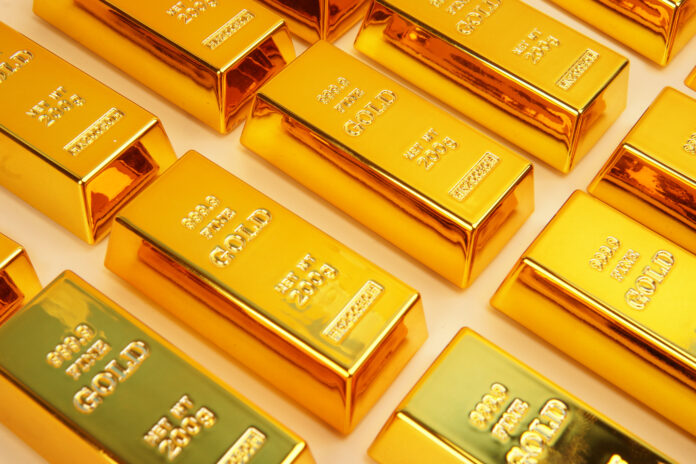
Gold prices slipped in global markets after the U.S. dollar strengthened, following news related to the Federal Reserve chair nomination, according to Reuters. Spot gold fell modestly as investors reassessed expectations for U.S. monetary policy and future interest‑rate moves.
A firmer dollar typically pressures gold prices because the metal becomes more expensive for holders of other currencies. Traders said the latest developments around Fed leadership added to uncertainty over how quickly interest rates might fall, reducing near‑term demand for non‑yielding assets like gold.
Despite the dip, analysts noted that gold remains well supported by broader geopolitical uncertainty and lingering concerns about inflation and global growth.
Why It Matters
Gold is widely viewed as a hedge against inflation, currency weakness, and financial instability. Movements in the dollar and interest‑rate expectations are among the strongest drivers of gold prices.
When markets anticipate lower interest rates, gold often benefits because the opportunity cost of holding it falls. Conversely, signs of sustained or slower‑to‑fall rates can weigh on prices, even if longer‑term fundamentals remain supportive.
For investors, gold’s reaction offers insight into broader risk sentiment and expectations around U.S. monetary policy.
Political and Geopolitical Implications
U.S. monetary policy decisions have global consequences, influencing currency markets, capital flows, and commodity prices. Changes in expectations around Fed leadership can therefore ripple through international markets.
Geopolitically, gold often attracts demand during periods of uncertainty, conflict, or financial stress. While the latest move reflects short‑term currency dynamics, longer‑term demand may remain influenced by global political and economic risks.
Central banks and institutional investors worldwide also monitor gold as part of reserve and portfolio strategies.
Implications
If the dollar continues to strengthen or rate‑cut expectations are pushed further out, gold could face additional near‑term pressure. However, analysts caution that downside may be limited given ongoing geopolitical risks and diversification demand.
Future signals from the Federal Reserve, inflation data, and global economic developments will be key in determining gold’s next direction. Investors are likely to remain cautious but engaged as policy clarity evolves.
Source
- Gold prices slip after dollar firmed on Fed chair news — Reuters, Jan. 30 20