Story Highlights
Florida approves renaming Palm Beach International Airport after Donald Trump.
The move reflects political support at the state level and symbolic recognition.
Decision highlights how infrastructure naming intersects with public identity and politics.
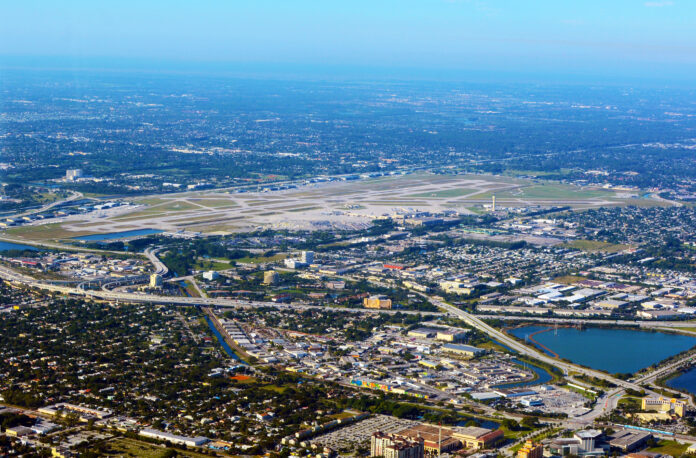
Officials in Florida have approved a proposal to rename Palm Beach International Airport in honor of President Donald Trump, marking a symbolic but notable development in how public infrastructure reflects political recognition. According to reporting from The Washington Post, the decision comes after state-level backing cleared the path for the renaming, positioning the airport as a prominent landmark tied to Trump’s legacy in the region.
The move is largely ceremonial in practical terms, but it carries broader significance in how public assets are used to reflect political identity and leadership recognition. Airports, highways, and federal buildings have long been named after political figures, often as a way to commemorate influence, tenure, or regional impact. In this case, Palm Beach holds particular relevance due to its association with Trump’s residence and long-standing presence in the area, making the renaming both geographically and politically aligned.
Supporters of the decision argue that naming the airport after Trump acknowledges his role in national leadership and his connection to Florida. They view it as part of a broader tradition of honoring political figures through public infrastructure. From this perspective, such recognition contributes to local identity and reinforces ties between leadership and community presence. The naming also reflects Florida’s political climate, where state-level support can shape how symbolic decisions are implemented.
From an economic standpoint, the renaming itself is unlikely to affect airport operations, passenger volume, or regional travel dynamics. Palm Beach International Airport serves as a key gateway for tourism and business travel in South Florida, and its functionality remains unchanged. However, branding and identity can play a subtle role in perception, particularly for international visitors and investors. Names associated with major political figures can influence how locations are perceived globally, even if operational aspects remain constant.
The decision also intersects with broader discussions about how public spaces are named and the criteria used for such recognition. Across the United States, debates over naming conventions have intensified in recent years, reflecting evolving views on history, leadership, and representation. While some naming decisions are widely accepted, others generate debate depending on political perspectives. In this context, the airport renaming highlights how infrastructure can become part of broader cultural and political narratives.
Politically, the move reinforces support for Trump within Florida’s leadership structure. State-level decisions of this nature often signal alignment with national political figures and can influence broader messaging. By associating a major transportation hub with Trump’s name, supporters aim to create a lasting and visible acknowledgment of his influence. Such decisions can also play a role in shaping public perception ahead of future political developments.
Geopolitically, the impact is more symbolic than strategic, but international observers often note how countries honor political leaders through public landmarks. Naming conventions can reflect stability, continuity, and political culture. For the United States, where infrastructure naming is decentralized and often driven by local or state decisions, such moves illustrate the diversity of approaches across regions.
Public reaction to naming decisions can vary widely. Some residents and stakeholders may view the change as a fitting recognition, while others may question the appropriateness or timing. These differing perspectives are common in infrastructure naming debates and reflect the broader diversity of political views within the country. Ultimately, the implementation process will determine how smoothly the transition is received.
Operationally, renaming an airport involves logistical adjustments, including signage updates, digital systems, and mapping services. These changes are typically phased in to avoid disruption. Airlines, travel platforms, and navigation systems must coordinate updates to ensure consistency. While such transitions are routine, they require careful execution to maintain clarity for travelers.
The decision also highlights how local governance plays a role in shaping national narratives. While federal policies often dominate headlines, state-level actions can have a lasting symbolic impact. By approving the renaming, Florida officials are contributing to how political legacy is represented in public spaces.
Why It Matters
Infrastructure naming reflects how societies recognize leadership and historical influence. While largely symbolic, such decisions shape public identity and cultural narratives.
For communities, naming can strengthen local connections to national figures. For observers, it provides insight into regional political alignment and priorities.
Political & Geopolitical Implications
Politically, the renaming reinforces support for Trump within Florida and signals alignment with his leadership legacy. It may also contribute to broader political messaging at both state and national levels.
Geopolitically, the impact is limited but symbolic. Public infrastructure naming can influence international perception of political culture and leadership recognition.
Implications
The approval of the airport renaming underscores the role of symbolism in public policy. While operational impact is minimal, the decision contributes to shaping how political legacy is represented in everyday spaces. As with similar actions, its significance lies less in functionality and more in perception and identity.