Story Highlights
Trump signed an executive order designating illicit fentanyl as a “weapon of mass destruction.”
The move frames the overdose crisis as a national-security fight, not just a public-health emergency.
Officials say the new designation widens the toolbox for targeting trafficking networks and supply chains.
What Happened
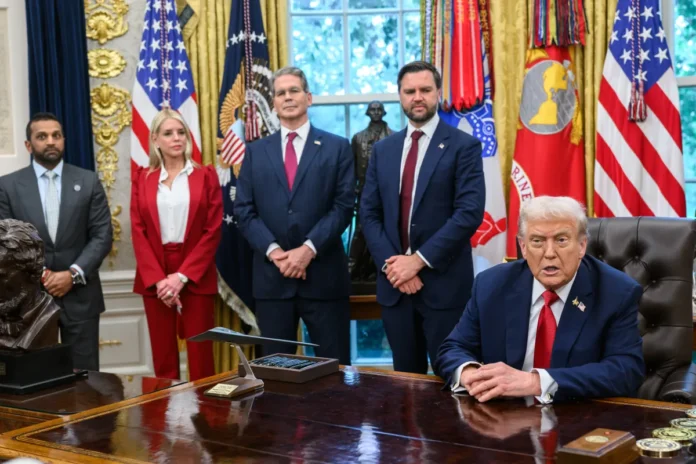
President Donald Trump signed an executive order on December 15, 2025, that classifies illicit fentanyl (and related illicit activity) under a “weapon of mass destruction” designation, elevating the federal government’s posture toward the synthetic opioid crisis. The White House action is unusual because “WMD” language is typically reserved for chemical, biological, radiological, and nuclear threats—not narcotics. Still, the administration argues fentanyl’s lethality and scale warrant a more expansive framework.
Supporters of the approach say the policy clarifies priorities across agencies and signals that trafficking organizations should be treated more like strategic adversaries than ordinary criminal enterprises. The order also places renewed emphasis on precursor chemicals and cross-border supply routes, a key issue in U.S. enforcement efforts.
Why It Matters
Fentanyl remains central to the U.S. overdose crisis, and the administration’s pitch is that incremental enforcement isn’t enough. By using a national-security framing, the White House is seeking faster interagency coordination and higher-intensity pressure on networks that manufacture, finance, transport, and distribute fentanyl. Proponents argue that the shift matters because it treats the crisis as an ongoing assault on American communities—one that requires sustained, whole-of-government focus.
Critics counter that “WMD” language can blur legal lines and raise escalation risks, but the administration is emphasizing deterrence and disruption. A Reuters report also notes public debate over tougher tactics and questions about how far the government can go under existing authorities.
Political and Geopolitical Implications
Politically, the order fits a broader “security-first” governing message: border enforcement, cartel pressure, and expanded disruption of trafficking infrastructure. Internationally, fentanyl policy typically intersects with Mexico (trafficking routes) and China (precursor chemicals), making this executive action a signal to foreign counterparts that the U.S. intends to press harder on supply-side cooperation and compliance.
Even if the executive order’s practical impact is debated, the strategic message is clear: the administration is tying fentanyl to national defense—seeking to mobilize additional federal capabilities and to justify a higher tempo of action against transnational networks.
Implications
Expect intensified interagency operations, sharper diplomatic pressure on supply-chain chokepoints, and a policy debate over how to balance security tools with public-health strategy. The next “tell” will be implementation: whether the designation produces measurable disruption of trafficking flows—and whether legal challenges or international pushback narrow how the policy is applied.
Sources (exact headlines used)