Story Highlights
- Federal Reserve indicates interest rates may remain unchanged in the near term
- Inflation is easing, but policymakers remain cautious about declaring victory
- Markets interpret the signal as a pause rather than a pivot
What Happened
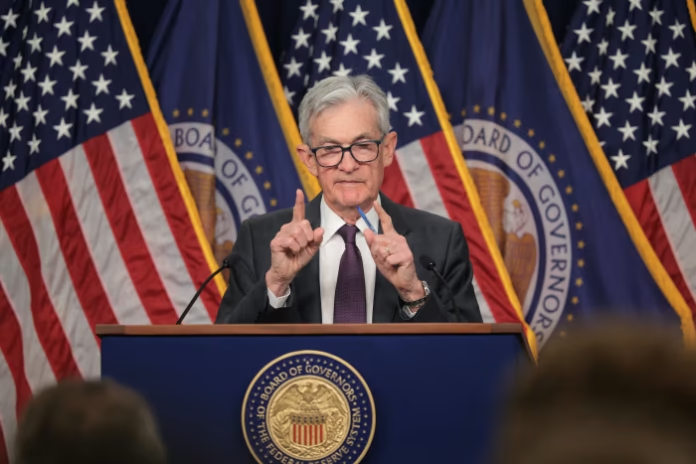
The Federal Reserve is signaling a more measured approach to monetary policy, suggesting that interest rates are likely to remain steady as inflation shows gradual signs of cooling. In recent remarks, Federal Reserve Chair Jerome Powell emphasized that while progress has been made in bringing inflation down, the central bank is not yet ready to shift aggressively toward rate cuts.
Officials are closely analyzing incoming economic data, including labor market strength, consumer spending patterns, and price stability indicators. The Fed’s current stance reflects a deliberate strategy: avoid premature easing that could reignite inflation while also preventing unnecessary pressure on economic growth.
This “pause posture” signals that policymakers are increasingly confident that past rate hikes are having the intended effect, but they remain cautious about moving too quickly in either direction. The result is a holding pattern that prioritizes stability over rapid policy shifts.
Why It Matters
Interest rate decisions from the Federal Reserve directly influence borrowing costs across the economy—from mortgages and credit cards to business loans and investment flows. A pause in rate hikes provides a level of predictability for markets that have experienced volatility over the past year.
For consumers, stable rates could ease pressure on financing costs, particularly in housing and credit markets. For businesses, it offers a clearer outlook for planning investments, hiring, and expansion strategies.
However, the Fed’s cautious tone also signals that inflation remains a concern. While price increases have moderated, policymakers are not yet convinced that inflation is fully under control. This means any expectations of quick rate cuts may be premature.
Geopolitical & Economic Implications
The Federal Reserve’s policy direction carries global implications. U.S. interest rates influence currency strength, capital flows, and economic decisions worldwide. A steady-rate environment may stabilize global markets, particularly in emerging economies sensitive to U.S. monetary shifts.
Domestically, the Fed’s stance is likely to play into broader economic discussions as policymakers and political leaders debate the path forward. Questions around inflation control, economic growth, and financial stability will remain central to policy conversations.
The emphasis on data-driven decision-making also reinforces the Fed’s commitment to long-term economic balance rather than short-term market reactions.
Implications
The Federal Reserve’s signal of a potential rate hold marks a transitional phase in the economic cycle. Inflation pressures are easing, but uncertainty remains, prompting a cautious and deliberate approach. For now, the central bank is prioritizing stability—sending a clear message that future moves will depend on sustained economic progress, not short-term optimism.