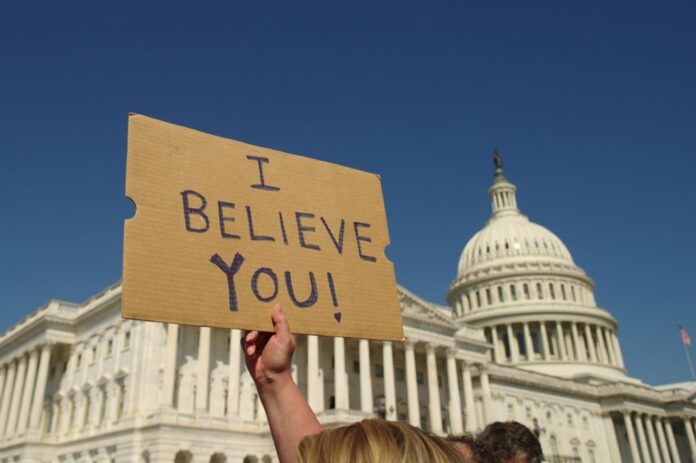
In August 2025, the U.S. Department of Justice came under renewed fire after two survivors of Jeffrey Epstein’s abuse filed letters in federal court accusing officials of protecting wealthy associates by keeping key names and documents redacted. The filings reignited long-standing questions about whether the government has prioritized elite reputations over victim justice.
Survivors Speak Out
The letters, submitted anonymously through attorneys to the Southern District of New York, allege that the DOJ and Trump-era officials engaged in a pattern of unnecessary redactions. Survivors argue this practice has concealed the identities of influential individuals who were connected to Epstein, slowing accountability and fueling public distrust.
One filing stated bluntly: “Victims were treated as pawns in political games while elites were shielded from scrutiny.”
The “Epstein List” Debate
Central to the dispute is the so-called “Epstein list”—a sealed roster of individuals who interacted with Epstein over several decades. Advocates say unsealing it is essential for transparency and healing. Legal experts, however, caution that releasing names without charges could violate due process.
Still, critics argue that the blanket secrecy has only deepened suspicion that the government is protecting powerful figures in politics, finance, and entertainment.
DOJ’s Silence
The Justice Department has not directly addressed the survivors’ latest claims. Officials have previously argued that redactions were made to protect privacy rights, ongoing investigations, and the integrity of witness testimony.
But with every new filing, pressure grows. Survivors, lawmakers, and advocacy groups are demanding that unredacted files be released to restore faith in the system.
Political Pressure Mounts
Congress has taken note. Lawmakers from both parties have issued subpoenas seeking more disclosure of Epstein-related records. Transparency advocates argue that sunlight is the only way to prevent conspiracy theories from festering.
Meanwhile, critics accuse the DOJ of adopting a double standard—swift to prosecute lower-level offenders but hesitant when influential figures are involved.
https://x.com/thedailybeast/status/1825521038481520712
Broader Criticism of the Justice System
The controversy has become emblematic of broader frustrations with how the U.S. justice system handles cases involving the wealthy and well-connected. Survivor advocacy groups say Epstein’s case is proof that power and privilege can still tilt the scales of justice.
For survivors, the fight is not just about Epstein—it is about setting a precedent to ensure that future cases are handled transparently, regardless of who is implicated.
What Happens Next
Legal experts predict the survivors’ filings may not immediately force unsealing but could strengthen arguments in ongoing transparency lawsuits. The outcome could reshape how courts handle redactions in high-profile cases, particularly when victims’ rights clash with elite privacy.
If more names are revealed, it could spark a wave of lawsuits, media scrutiny, and potentially criminal investigations—changing the trajectory of the Epstein saga yet again.
Final Thoughts
Nearly six years after Epstein’s death, his case continues to haunt U.S. institutions. For survivors, the fight is about more than uncovering names—it is about dismantling the perception that the justice system bends to the powerful.
Whether the DOJ caves to pressure or doubles down on secrecy, one thing is clear: the demand for transparency isn’t going away.