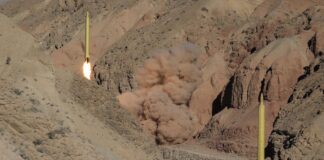
China deployed dozens of military aircraft and naval vessels near Taiwan in a new round of military activity that Taiwan’s defense ministry described as one of the latest demonstrations of pressure from Beijing. Taiwanese officials reported that multiple Chinese fighter jets and surveillance aircraft crossed the median line of the Taiwan Strait — an unofficial boundary long used to reduce tensions between the two sides.
The military movements prompted Taiwan to scramble fighter jets and deploy naval patrols to monitor the situation.
Situation Overview
Taiwan’s defense ministry said several Chinese aircraft, including fighter jets and reconnaissance planes, entered areas close to Taiwan’s air defense identification zone. Naval vessels were also detected operating in nearby waters.
Taiwanese forces responded by launching air patrols and activating radar systems to track the movements of the aircraft and ships.
Officials emphasized that Taiwan’s military remained prepared to respond if necessary while continuing to monitor the situation closely.
Strategic Context
China considers Taiwan a part of its territory and has repeatedly stated that it intends to achieve reunification with the island. Taiwan, however, operates as a self-governing democracy with its own political system and military.
Military exercises and patrols near Taiwan have become increasingly common in recent years as Beijing attempts to demonstrate its growing military capabilities.
Security analysts say these operations serve several strategic purposes:
Demonstrating China’s expanding military reach
Applying political pressure on Taiwan’s leadership
Testing Taiwan’s air defense response
Sending signals to regional rivals and global powers
U.S. and Regional Response
The United States maintains a policy of supporting Taiwan’s defensive capabilities while encouraging stability in the Taiwan Strait.
American naval forces regularly operate in nearby waters as part of freedom-of-navigation missions designed to ensure open access to international sea lanes.
Regional allies including Japan and South Korea are closely monitoring developments due to concerns about regional security stability.
Global Security Implications
Security experts warn that tensions involving Taiwan represent one of the most sensitive geopolitical flashpoints in the world.
Potential consequences of a conflict in the Taiwan Strait include:
Disruption of global semiconductor production
Major impacts on international shipping routes
Increased military tensions in the Indo-Pacific region
Significant effects on global financial markets
Taiwan is home to some of the world’s most important semiconductor manufacturing facilities, making the region strategically vital to global technology supply chains.
What Analysts Are Watching
Experts say the next phase of tensions may depend on several developments:
The frequency of Chinese military exercises near Taiwan
Taiwan’s military modernization and defense strategy
U.S. military presence in the Indo-Pacific
Diplomatic engagement between Washington and Beijing
While military activity has increased, analysts say all sides remain cautious about triggering a direct military confrontation.
Bottom Line
China’s expanding military presence near Taiwan highlights the growing strategic competition shaping the Indo-Pacific region. With rising military activity and increasing geopolitical stakes, the Taiwan Strait remains one of the most closely watched security flashpoints in global politics.