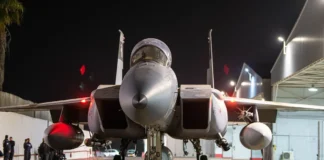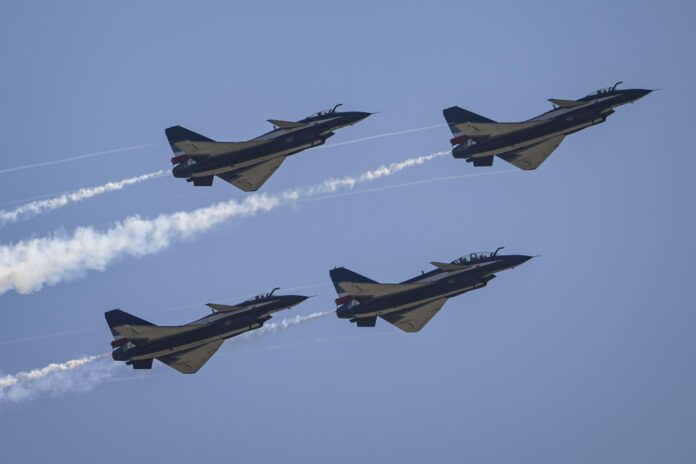
China launched a new round of large-scale military exercises around Taiwan this week, deploying warships, fighter jets, and missile units in drills that analysts say are designed to demonstrate Beijing’s growing military pressure on the self-governing island. Taiwan’s defense ministry reported dozens of Chinese aircraft and naval vessels operating near the Taiwan Strait during the latest maneuvers.
The exercises come amid ongoing tensions between Beijing and Taipei, with Chinese leaders insisting that Taiwan is part of China while Taiwan’s government maintains its separate political system and democratic governance. Security experts say the drills are intended to signal China’s readiness to assert control over the region if necessary.
Situation Overview
Taiwanese defense officials reported that Chinese fighter jets and surveillance aircraft crossed the median line of the Taiwan Strait — an unofficial boundary that has historically served as a buffer between the two sides. Warships from China’s navy were also detected conducting maneuvers near Taiwan’s surrounding waters.
Taiwan responded by deploying its own fighter aircraft, naval vessels, and coastal missile systems to monitor the situation. Officials emphasized that the military remains prepared to defend the island’s sovereignty and territorial waters.
The exercises are among the largest military movements near Taiwan in recent months.
Strategic Context
China has significantly expanded its military presence around Taiwan over the past several years. Beijing’s strategy often involves conducting large-scale drills intended to simulate blockade scenarios or amphibious assault operations.
Analysts say these exercises serve several purposes:
Demonstrating China’s growing military capabilities
Applying political pressure on Taiwan’s leadership
Testing Taiwan’s defensive readiness
Sending signals to the United States and regional allies
Taiwan remains a central geopolitical issue in the broader strategic competition between China and the United States.
U.S. and Regional Response
The United States has maintained a policy of supporting Taiwan’s defensive capabilities while discouraging unilateral changes to the status quo in the Taiwan Strait.
American naval forces regularly operate in nearby waters as part of freedom-of-navigation missions designed to uphold international maritime law.
Regional allies including Japan and South Korea are also closely monitoring the exercises due to concerns about regional security stability.
Global Security Implications
Security analysts warn that tensions surrounding Taiwan represent one of the most sensitive geopolitical flashpoints in the world.
A military conflict in the Taiwan Strait could affect:
Global semiconductor production
International shipping routes in the Pacific
Regional military alliances
Global financial markets
Taiwan plays a crucial role in the global technology supply chain, particularly in semiconductor manufacturing.
What Analysts Are Watching
Experts say several developments could shape future tensions:
The scale and frequency of Chinese military exercises
Taiwan’s defensive military modernization
U.S. military presence in the Indo-Pacific region
Diplomatic communication between Washington and Beijing
While military exercises have become more frequent, analysts say all sides remain cautious about triggering a direct military confrontation.
Bottom Line
China’s expanding military drills around Taiwan highlight the growing strategic competition shaping the Indo-Pacific region. With rising military activity and increasing geopolitical stakes, the Taiwan Strait continues to represent one of the most closely watched security flashpoints in global politics.