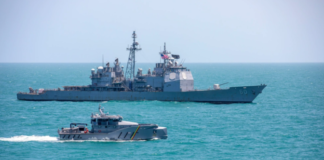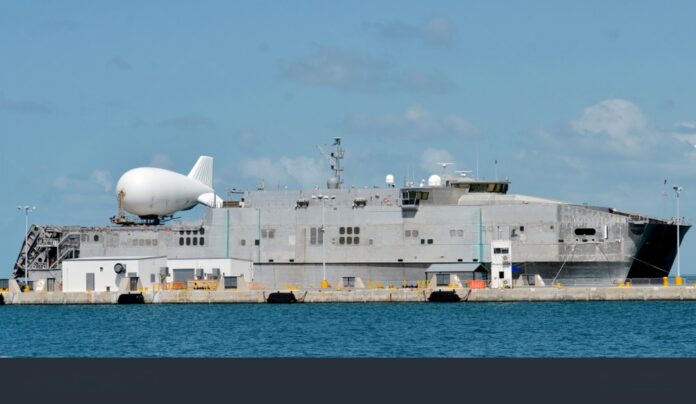
The U.S. military has confirmed carrying out a lethal strike on a Venezuelan vessel allegedly smuggling cocaine and fentanyl through the Caribbean. President Donald Trump announced that three people were killed in the attack, describing it as part of his administration’s “maximum pressure” campaign against international drug cartels. The incident marks the second such operation in as many weeks, underscoring how Washington is intensifying its anti-narcotics push while raising questions about the risks of escalation with Venezuela.
What Happened at Sea
According to military officials, the strike occurred after U.S. surveillance identified a boat believed to be transporting large quantities of cocaine and fentanyl from Venezuelan waters. When the vessel ignored warnings to stop, American forces moved in. In the confrontation that followed, U.S. assets launched a targeted strike, destroying the boat and killing three people onboard. Officials say the action prevented a significant shipment of narcotics from reaching American shores.
The Pentagon has not released the identities of those killed but stressed that intelligence linked the craft to known trafficking networks tied to Venezuela’s coastline.
Why the U.S. Acted
The Trump administration has framed drug trafficking not just as a law enforcement issue but as a matter of national security. With fentanyl overdoses hitting record highs in the U.S., the White House argues that aggressive interdictions send a strong signal to cartels and their state backers.
Trump said in a statement: “The United States will not sit idly by while criminal networks poison our communities. If Venezuela cannot or will not stop these operations, we will.”
Reactions from Venezuela
Caracas condemned the strike, accusing Washington of violating its sovereignty and escalating tensions in the Caribbean. Venezuelan officials insisted the vessel was a civilian fishing boat, not a drug craft. They labeled the deaths as “an act of aggression” and vowed to bring the matter before international bodies.
Opposition groups within Venezuela, however, were more muted, with some noting that the Maduro government has long been accused of looking the other way—or even facilitating—drug trafficking operations tied to powerful elites and the military.
Escalation Risks
This marks the second deadly maritime strike by U.S. forces in less than two weeks, suggesting a more aggressive posture under Trump. Analysts warn that repeated incidents could spark military or diplomatic retaliation from Venezuela or its allies. The timing is especially sensitive as Washington has simultaneously pursued sanctions, asset freezes, and other punitive measures aimed at undermining the Maduro regime.
At the same time, supporters argue that decisive military action disrupts smuggling operations and shows Washington’s willingness to protect U.S. communities from the deadly fentanyl pipeline.
Global and Domestic Context
Internationally, the strike is likely to deepen fault lines between U.S. allies who support tougher measures against Venezuela and those who worry about violations of sovereignty. Domestically, it plays into Trump’s law-and-order messaging, reinforcing his image as a leader willing to use force to combat drugs and crime.
Still, some lawmakers on Capitol Hill have raised concerns about mission creep. They argue that without congressional approval, continued strikes risk drawing the U.S. into broader conflict under the guise of narcotics enforcement.
What to Watch Next
Evidence Disclosure – Will the Pentagon release more proof linking the destroyed vessel to narcotics?
Venezuelan Response – Will Caracas retaliate diplomatically, militarily, or both?
Regional Security – Could neighboring Caribbean nations be pulled into U.S. enforcement efforts?
U.S. Domestic Debate – Will Congress push back against unilateral military actions in the drug war?
The next steps may determine whether this remains a targeted anti-narcotics action—or escalates into a larger confrontation.
Sources
- AP News
- Reuters
- The Guardian
- Wion