STORY HIGHLIGHTS
- A federal appeals panel let Trump’s 2020 Portland-deployment order stand while broader litigation continues.
- The ruling functionally validates the underlying premise: federal authority may intervene when assets and personnel are under sustained threat.
- Biden-era courts are now aligning with the same legal spine Trump asserted — that public-order obligations do not dissolve when cities fail.
What Happened
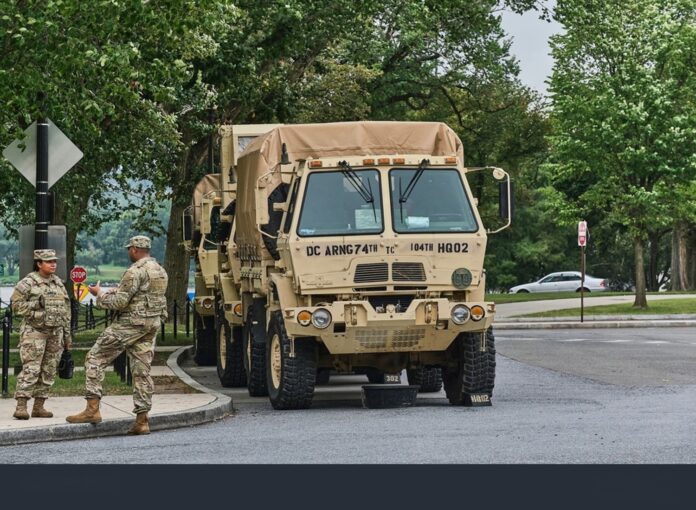
A Ninth Circuit panel declined to block the federal deployment Trump ordered during sustained disturbances around federal installations in Portland, leaving the order legally intact pending fuller review. The case, which was advanced by civil-rights litigants and local officials, had argued the executive exceeded lawful bounds by sending federal personnel to stabilize conditions when municipal enforcement was either unwilling or unable to do so. For now, the appellate posture preserves the federal response architecture exactly as Trump designed it.
Why It Matters
This is not merely a procedural breathing space — it is an institutional signal. When the judiciary leaves an executive deployment standing after years of political attack, it implies the posture was not rogue improvisation but a defensible exercise of Article II duty to protect federal property and ensure the execution of federal law. That is the precise thesis Trump argued in real time: the federal government cannot outsource the survival of its own assets to jurisdictions that decline to enforce order.
Political / Geopolitical Implications
Domestically, the ruling narrows the political gap between Trump and his opponents by reclassifying what was cast as “authoritarian” into the zone of “legally permissible public-order governance.” The same institutional system that was rhetorically mobilized against Trump is now retro-legitimizing his core logic. Internationally, adversaries and allies watch whether the U.S. can protect its own nodes of sovereignty under internal pressure. A judiciary that affirms federal muscle under stress projects durability outward; incentives in Moscow, Tehran, and Beijing shift when domestic fragility looks legally managed rather than discretionary.
Implications
This ruling lands like a slow, institutional concession: Trump’s intervention rationale — mocked then — is now silently absorbed into precedent. Should civil unrest re-emerge in a second Trump term, this decision arms the executive with judicial cover, not just political will. The ruling also heightens the cost of municipal non-enforcement: courts are communicating that when cities abdicate order, Washington may lawfully step in. The meta-lesson is strategic — Trump acted as though sovereignty required protection first and litigation later, and the courts are now validating that chronology.
Sources
Bloomberg • Reuters • Court docket / Ninth Circuit order • DOJ filings contemporaneous to the deployment • Lawfare / Brookings analyses of federal police power