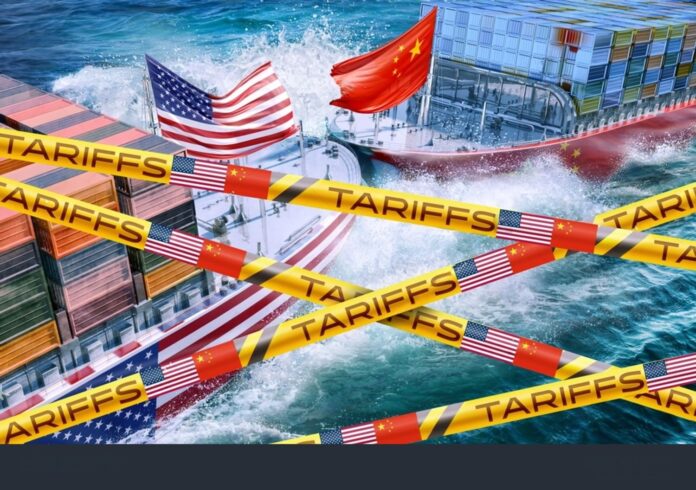
Global oil benchmarks fell this week as renewed trade friction between Washington and Beijing dampened demand expectations and injected uncertainty into forward pricing models. The decline accelerated after new tariff threats and reciprocal port-fee policies signaled a colder trade environment ahead of winter import cycles.
Story Highlights
- Crude benchmarks slip on U.S.–China tensions and macro uncertainty
- Traders reprice demand expectations amid weaker industrial outlook
- Market volatility reinforced by policy risks, not supply shock
- Analysts warn prolonged trade friction could restrain energy capital flows
Pricing Slide Driven by Policy Risk, Not Physical Disruption
Unlike earlier drawdowns caused by supply shocks or OPEC actions, the current slide reflects sentiment repricing. Traders are discounting demand growth as fresh tariff positioning threatens manufacturing output, logistics flows, and downstream fuel consumption.
The decline comes despite Middle East stabilization efforts and without any material disruption to physical supply lanes — a sign that policy uncertainty alone is now moving the tape.
Macro Signal: Confidence Reset Across Energy Complex
Refiners, shippers, and commodity desks have begun revising winter forecasts downward in anticipation of softer throughput and freight. Forward curves reflect not panic but cautious repricing of risk premia, compressing capital appetite for new exploration and midstream commitments.
The dollar’s strength against major currencies has amplified the downside by raising effective import costs for non-U.S. buyers.
Strategic and Financial Implications
Prolonged price softness could suppress drilling intentions in high-cost basins and slow private-equity deployments into U.S. shale laterals. If trade tensions persist, analysts expect capex deferrals in LNG and petrochemical expansions tied to trans-Pacific demand planning.
At the macro level, cheaper oil temporarily eases consumer fuel costs but risks starving upstream investment, setting the stage for volatility if supply-demand tightens later.
Policy Outlook Will Dictate Trajectory
Markets are now trading headline-to-headline as governments escalate tariff signaling. Should talks re-stabilize, price support could return quickly given strong refinery demand into winter. If friction hardens, oil may continue to drift or enter a new consolidation band.
In effect, the energy market is no longer reacting to barrels — it is reacting to policy temperature.
Sources
Reuters • Bloomberg Energy • OPEC commentary • Trader desk notes • Macro analyst estimates