What Happened
As the federal shutdown stretches on, NASA has been forced to suspend most ground-based activities—but the International Space Station (ISS) remains fully operational.
According to a memo from NASA Administrator Bill Nelson, about 17,000 of the agency’s 18,500 employees have been placed on furlough, leaving only the teams directly supporting crewed spaceflight and spacecraft safety online.
While the Mission Control Center in Houston continues 24/7 support for the ISS, many ongoing research programs, software updates, and Artemis-related development projects have been paused indefinitely.
NASA confirmed that private-sector partners such as SpaceX and Boeing will continue contracted launches and maintenance under pre-funded agreements unaffected by the funding freeze.
Why It Matters
The partial shutdown underscores the fragility of America’s space program when politics collide with science.
For years, lawmakers have warned that even brief interruptions in funding could slow NASA’s ambitious timeline for returning astronauts to the Moon and eventually landing humans on Mars.
Although essential ISS operations are protected, researchers say the delay in ground work could create cascading effects—missing launch windows, interrupting climate-monitoring satellites, and delaying space-technology testing.
Analysts estimate the agency loses roughly $150 million per week in disrupted contracts and deferred tasks during a shutdown.
Beyond finances, the episode reveals how reliant U.S. space progress remains on continuous government coordination, despite growing private-sector participation.
One former NASA engineer put it simply: “You can’t launch innovation on stop-and-go funding.”
Reactions
Reactions have been mixed but measured.
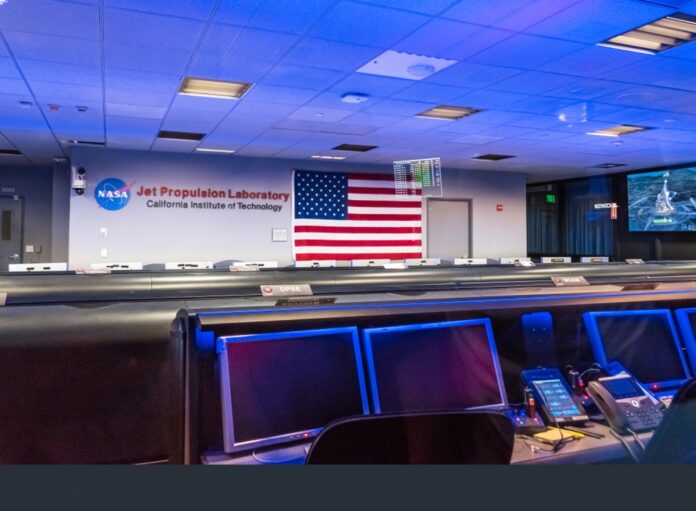
NASA employees have taken to social media under the hashtag #NASAShutdown, sharing images of dark hallways at research centers in Florida, Virginia, and California.
Astronauts aboard the ISS, however, sent a reassuring video message emphasizing that “space operations never sleep.”
Lawmakers on both sides expressed frustration that space exploration has become collateral damage in budget disputes.
Senator Maria Cantwell (D-WA), chair of the Senate Commerce Committee, said, “Spaceflight should not be a partisan hostage.”
Republican Senator Ted Cruz countered, “NASA must learn to operate efficiently like our commercial partners—if SpaceX can keep flying, so can we.”
Internationally, partners from Europe, Japan, and Canada reaffirmed their commitment to the ISS program, ensuring no disruption to supply or communications.
Financial markets shrugged off the news, with aerospace stocks holding steady—investors assuming operations will resume once funding is restored.
What’s Next
NASA officials say the immediate focus is ensuring ISS safety and astronaut well-being while preparing to restart paused projects once Congress passes a budget deal.
Among those awaiting green lights: Artemis III lunar testing at Kennedy Space Center, Mars Sample Return preparations, and James Webb Space Telescope maintenance scheduling.
If the shutdown extends beyond two weeks, experts warn it could delay NASA’s 2026 Artemis launch by several months, as coordination among subcontractors and international agencies becomes increasingly tangled.
For now, the agency remains in “safe mode,” balancing fiscal reality with operational continuity.
As one flight director remarked, “The lights are dim at NASA—but they’re still on in orbit.”
Sources
- Economic Times
- Reuters
- NASA.gov
- The Verge