What Happened
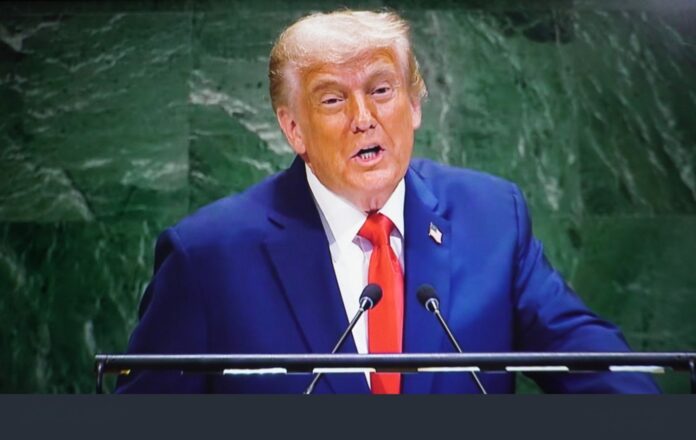
In a move that underscores his tough-love approach to fiscal discipline, President Donald Trump’s administration announced that federal employees furloughed during the ongoing government shutdown may not automatically receive back pay once funding resumes.
The White House Office of Management and Budget (OMB) issued an internal memo reminding agencies that retroactive pay requires explicit congressional authorization—not a presidential order.
The message came as the shutdown entered its second week, with hundreds of thousands of non-essential employees on unpaid leave. Trump officials defended the position as “procedural,” not punitive, emphasizing that taxpayer money should not be used to reward government stagnation.
Why It Matters
For Trump, the statement is about principle and accountability, not paychecks.
Supporters argue that automatic back pay incentivizes gridlock—allowing Washington to shut down repeatedly with no real consequences.
By holding firm, Trump aims to send a message to both Congress and the federal bureaucracy: the government exists to serve citizens efficiently, not itself.
Fiscal conservatives hailed the move as a rare act of responsibility in a city addicted to spending. With the national debt topping $36 trillion, Trump’s allies say he’s drawing attention to how bureaucratic costs balloon even when operations halt.
Opponents, predictably, painted the decision as cruel. But for Trump’s base, it’s yet another sign that the President is willing to take unpopular stands to force accountability.
Reactions
The reaction was as polarized as Washington itself.
Federal-worker unions condemned the memo, warning of “financial devastation” for furloughed employees. Senate Democrats accused the White House of “weaponizing hardship” to pressure Congress into passing spending reforms.
On the other side, conservative lawmakers cheered. “Back pay shouldn’t be a bailout for inefficiency,” said Senator Rand Paul. “If agencies can shut down without affecting essential life, maybe they shouldn’t exist.”
Social media split sharply: hashtags #NoWorkNoPay and #StandWithTrump trended alongside #StopTheShutdown.
Many citizens applauded Trump’s consistency—reminding others that he’s the first president in decades to challenge the assumption that government always gets paid, even when it doesn’t work.
Markets reacted mildly, suggesting investors see the standoff as a temporary political maneuver rather than an economic crisis. Analysts noted that Trump’s focus on spending restraint could actually calm long-term fiscal fears if it leads to structural reform.
What’s Next
House leaders are expected to introduce a bill mandating retroactive pay, putting Trump in the position of deciding whether to sign or veto.
Insiders say the President may allow back pay—but only as part of a broader budget deal that includes federal workforce reductions and performance audits.
Meanwhile, the OMB is working with agency heads to identify departments that can consolidate or downsize to offset future shutdown costs.
Trump’s message remains unwavering: “Washington can’t keep pretending to fix its problems with more money.”
If the standoff lasts much longer, the White House plans to propose a “Shutdown Accountability Act”—legislation tying agency funding to measurable productivity benchmarks.
Such a policy could permanently change how future shutdowns play out, forcing Congress and federal employees alike to share responsibility for every impasse.
For Trump’s supporters, that’s leadership—governing with discipline, not emotion.
Sources
- Associated Press
- Fox Business
- Reuters
- The Hill