Story Highlights
- House Republicans will hold leadership elections on November 10, with a two-hour candidate forum preceding the voting
- Members must declare candidacy by November 6 at noon for leader, whip, conference chair, and other positions
- Uncertainty surrounds Speaker Mike Johnson’s intentions regarding seeking another term as party leader
- The timing of the election follows Election Day, with the outcome potentially dependent on whether Republicans maintain House control
What Happened
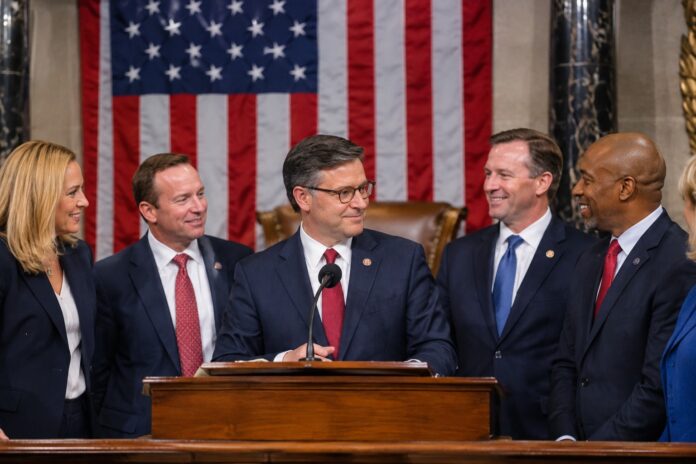
House Republicans have scheduled their party leadership elections for November 10, according to GOP staffers familiar with the plans. The election cycle will begin with a two-hour candidate forum held that morning, followed by voting to determine the positions of leader, whip, conference chair, and other party offices. This timeline gives party members a week following Election Day to settle internal leadership questions.
The Republican conference has established November 6 at noon as the deadline for members to formally declare their candidacy for any of the contested positions. Should Republicans maintain control of the House following the general election, a floor vote for Speaker will occur at the beginning of the new Congress in January. The compressed timeline reflects the party’s desire to resolve leadership questions quickly after the electoral outcome becomes clear.
- Leadership elections scheduled for November 10 with a two-hour morning candidate forum
- Candidacy declaration deadline set for November 6 at noon
- Speaker floor vote would occur in January if Republicans retain House control
- Multiple positions subject to election including leader, whip, and conference chair
Why It Matters
The leadership election process carries significant implications for Republican party direction and unity heading into the next Congress. The outcome will shape how Republicans approach legislation, messaging, and party discipline. Should the House majority change hands, the election would determine who leads Republicans in a minority position, a role that carries different strategic considerations than majority leadership.
Speaker Mike Johnson’s future in the role remains uncertain, creating potential for substantial shifts in House Republican leadership. Various scenarios could unfold depending on both the general election results and Johnson’s own decision about whether to seek continued leadership. The uncertainty creates space for other potential candidates to position themselves and gauge support among the conference membership.
- Leadership decisions will influence Republican legislative priorities and party discipline in the next Congress
- Outcome depends partly on general election results and whether Republicans maintain House control
- Potential for significant leadership changes if party experiences major electoral losses
- Conference unity and morale may be affected by the leadership transition process
Political and Public Context
House Republicans face the possibility of losing their current majority position in the chamber, a factor that adds weight to the leadership election process. Democratic candidates are reportedly favored in forecasting models to win back control of the lower chamber, though final electoral outcomes remain uncertain. The leadership election timing creates a critical juncture for Republican strategic planning regardless of the election outcome.
Speaker Johnson has previously expressed conflicting signals about his leadership intentions. In an interview with Fox News, he mentioned the possibility of returning to Louisiana if Republicans lost the House, though his spokesperson subsequently clarified that Johnson intended to remain in Congress. Johnson later indicated to CBS News his expectation to continue serving as party leader even in scenarios involving divided government, suggesting resolve to maintain his position barring unforeseen circumstances. Some Republican lawmakers and aides have privately discussed alternative leadership candidates, including House Majority Leader Steve Scalise and House Judiciary Committee Chair Jim Jordan, particularly if election results prove disappointing for the party.
- Democratic forecasting models show favorable odds for winning House control
- Speaker Johnson has provided multiple statements regarding his leadership plans with varying emphasis
- House Majority Leader Steve Scalise and House Judiciary Committee Chair Jim Jordan mentioned as potential alternative leaders
- Leadership questions reflect broader party concerns about electoral performance and strategic direction
House Republicans set leadership elections https://t.co/hcghEdnx6J
— POLITICO (@politico) October 26, 2026
What Happens Next
The November general election will provide crucial information that shapes the leadership election dynamics. If Republicans maintain House control, Johnson and other potential candidates will campaign for their respective positions before voting occurs on November 10. The candidate forum will provide an opportunity for those seeking leadership roles to present their vision and qualifications to the full conference.
Following the November 10 internal elections, the winning candidates will prepare for the formal floor votes and ceremonial swearing-in that will occur in January when the new Congress convenes. The leadership structure established through this process will remain in place throughout the 119th Congress, making these decisions consequential for legislative priorities and party messaging for the subsequent two years.
- November general election results will significantly influence leadership election dynamics and candidate viability
- Candidate forum on November 10 morning will precede official voting on party leadership positions
- Winners of internal elections will undergo formal floor votes and swearing-in in January
- Established leadership will shape Republican legislative agenda and strategy for the full Congress term