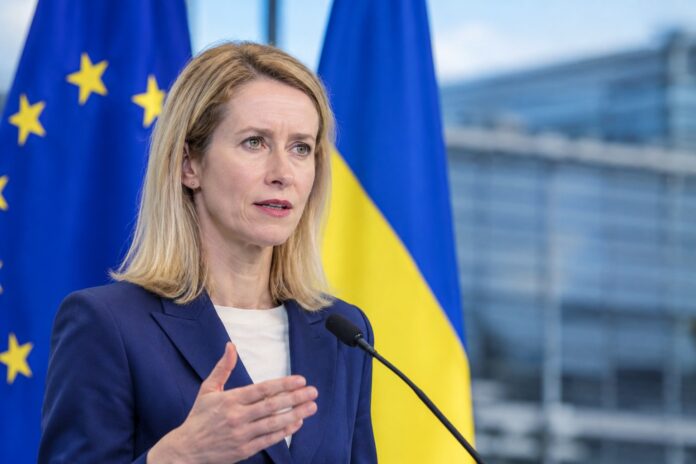
Story Highlights
- Kaja Kallas emphasizes the importance of resisting Russian intimidation tactics.
- Her personal history under Soviet rule informs her perspective on current geopolitical tensions.
- The EU’s top diplomat warns that yielding to intimidation could embolden Moscow’s aggression.
- Calls for a united European front in support of Ukraine are echoed throughout her statements.
What Happened
In a recent interview with Fox News Digital, Kaja Kallas, the Vice-President of the European Commission, articulated a strong warning regarding Russia’s ongoing intimidation tactics aimed at Europe. Kallas, who has a deeply personal connection to the historical context of Russian aggression, underscored the necessity for Europe to remain steadfast in its support for Ukraine. She stated that the Kremlin’s goal is to instill fear in European nations, thereby discouraging them from providing military and financial assistance to Ukraine. This intimidation, she argues, is a strategy that could lead to increased aggression from Moscow if it is successful.
Kallas’s remarks came during the U.N. General Assembly, where she emphasized that the European Union must not succumb to fear. She noted, ‘What is important for us is that we are not afraid,’ highlighting the potential global ramifications of yielding to intimidation. Her historical background, having grown up under Soviet rule, adds a poignant layer to her advocacy for a robust European defense posture against Russian threats.
- Kaja Kallas warned against Russian intimidation tactics during an interview on September 20, 2023.
- She emphasized the need for Europe to maintain support for Ukraine amidst Russian aggression.
- Kallas’s family history includes experiences of Soviet deportation and oppression.
- Her leadership role as the EU’s high representative for foreign affairs positions her as a key figure in European security discussions.
Why It Matters
The implications of Kallas’s statements are significant, as they reflect a broader concern among European leaders regarding the potential for Russian aggression to destabilize the region. If European nations were to back down in the face of intimidation, it could embolden Russia to pursue more aggressive actions not only in Ukraine but also in other neighboring countries. Kallas’s call for unity among European nations is crucial, as a fragmented response could lead to vulnerabilities that Russia might exploit.
Moreover, Kallas’s personal history serves as a powerful reminder of the consequences of appeasement. Her family’s experiences during the Soviet era illustrate the long-lasting impacts of intimidation and oppression. By sharing her story, Kallas aims to galvanize European leaders and citizens alike to recognize the importance of standing firm against threats to sovereignty and democracy.
- Yielding to Russian intimidation could lead to increased aggression from Moscow.
- Kallas’s leadership is pivotal in shaping EU foreign policy towards Russia.
- European unity is essential to counteract potential threats from Russia.
- The historical context of Soviet oppression informs current geopolitical strategies.
Political and Public Context
The backdrop of Kallas’s warnings is the ongoing conflict in Ukraine, which has seen Russia’s military actions escalate since 2014. The annexation of Crimea and the support for separatist movements in Eastern Ukraine have raised alarms across Europe and the West. Kallas’s emphasis on the need for a united front against Russian aggression is echoed by other leaders in the region, who recognize the importance of solidarity in the face of such threats.
Additionally, the historical context of Soviet rule in Eastern Europe cannot be overlooked. Many nations in the region, including Estonia, Latvia, and Lithuania, have experienced the harsh realities of Soviet oppression. This shared history fosters a collective understanding of the dangers posed by Russian expansionism. Kallas’s position as a leader who has lived through these experiences adds credibility to her calls for vigilance and resilience.
- The conflict in Ukraine has been ongoing since 2014, following Russia’s annexation of Crimea.
- Eastern European nations share a historical context of Soviet oppression, influencing their current policies.
- European leaders are increasingly vocal about the need for a united response to Russian threats.
- Kallas’s leadership role is pivotal in shaping the EU’s approach to foreign affairs and security policy.
Europe’s hesitancy to get tougher with Russia is rooted in a fear of tit-for-tat escalation. https://t.co/J3s8ZpbUA0
— Foreign Policy (@ForeignPolicy) September 27, 2026
What Happens Next
Looking ahead, the future of European security will likely hinge on the ability of EU nations to present a united front against Russian intimidation. Kallas’s warnings may serve as a catalyst for renewed discussions on defense spending, military cooperation, and diplomatic strategies aimed at countering Russian influence. The EU may also need to consider additional sanctions or measures to deter further aggression from Moscow.
Moreover, the ongoing situation in Ukraine will continue to be a focal point for European leaders. As the conflict evolves, the EU’s response will be critical in shaping the geopolitical landscape of the region. Kallas’s leadership will be instrumental in navigating these challenges, ensuring that the lessons of history are not forgotten in the face of contemporary threats.
- EU nations may increase defense spending and military cooperation in response to threats.
- Further sanctions against Russia could be considered to deter aggression.
- The situation in Ukraine will remain a key focus for European leaders.
- Kallas’s leadership will be crucial in shaping the EU’s future security policies.