Story Highlights
U.S. stock indexes climbed following the Supreme Court’s tariff decision.
Nasdaq snapped a multi‑week losing streak amid renewed investor confidence.
Markets reacted positively to greater clarity around trade authority.
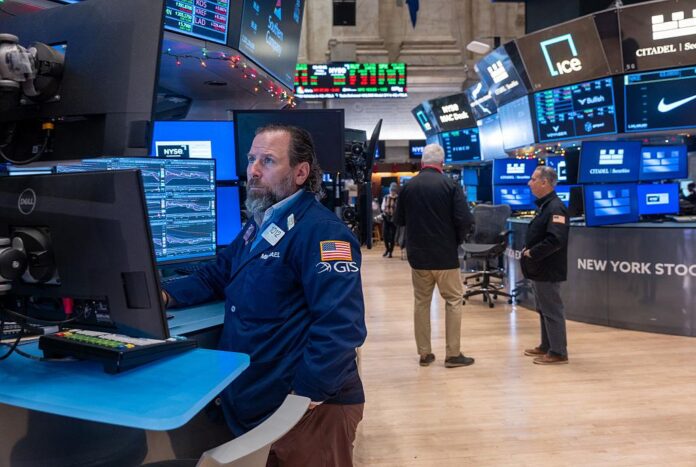
U.S. markets moved higher after the Supreme Court of the United States ruled that sweeping global tariffs imposed under emergency authority were unlawful without congressional approval. According to reporting from CNBC, major indexes posted gains, with the Nasdaq breaking a five‑week losing streak as investors responded to reduced trade uncertainty.
The ruling effectively curtails the use of a 1977 emergency law to impose broad import duties without legislative authorization. While the decision centered on constitutional authority rather than economic policy itself, markets interpreted it as a step toward greater stability. Investors have often reacted negatively to abrupt tariff changes due to their impact on supply chains, input costs, and corporate earnings forecasts. The Court’s clarification introduces clearer boundaries around how trade measures can be enacted.
Technology stocks led gains, benefiting from improved sentiment around cross‑border trade. Many large U.S. tech firms depend on global manufacturing networks and international consumer markets. Reduced risk of sudden tariff escalations can ease pressure on margins and long‑term planning. Industrials and consumer‑discretionary sectors also saw movement, reflecting optimism that more predictable trade policy could support investment and spending.
Market analysts noted that clarity, even if it limits certain policy tools, is often preferable to uncertainty. Over the past several years, tariff volatility has periodically contributed to swings in equities, currency markets, and commodity prices. By reinforcing congressional oversight, the Court’s decision may slow the pace of abrupt trade actions, encouraging a steadier legislative process.
Bond markets showed relatively muted reaction, suggesting investors do not expect immediate shifts in inflation or interest‑rate trajectories solely due to the ruling. However, some strategists indicated that longer‑term trade stability could influence capital expenditure decisions, particularly in manufacturing and logistics sectors.
The ruling also arrives amid broader economic recalibration. Companies are reassessing supply chains following pandemic‑era disruptions and geopolitical tensions. Greater predictability in tariff policy may support corporate planning for reshoring, diversification, or international expansion strategies. Investors frequently factor regulatory stability into valuation models, making legal clarity a positive signal.
International markets responded cautiously but constructively. Asian and European indexes posted modest gains, reflecting expectations that reduced unilateral tariff authority may ease friction in ongoing trade discussions. Global investors often view U.S. legal decisions as indicators of institutional consistency, reinforcing confidence in governance frameworks.
Still, analysts caution that trade debates are far from settled. Congress may pursue new legislation to redefine tariff powers more explicitly. Future negotiations with major trading partners will continue to shape global commerce dynamics. The market rally reflects short‑term relief, but structural competition in technology, energy, and manufacturing remains a central theme.
Why It Matters
Financial markets thrive on predictability. When trade policy is subject to rapid shifts, companies face higher risk premiums and more cautious capital deployment. The Court’s ruling reduces ambiguity around executive authority, potentially stabilizing expectations for businesses and investors alike.
The reaction also underscores how deeply trade policy influences market performance. From semiconductor producers to agricultural exporters, industries across the economy are sensitive to tariff structures. Legal guardrails can therefore have immediate financial ripple effects.
Political & Geopolitical Implications
Politically, the ruling may prompt lawmakers to craft clearer trade statutes. Any new framework will likely shape investor expectations regarding future tariff use. The shift toward congressional authority could introduce more deliberative policymaking, which markets typically interpret as stabilizing.
Geopolitically, the decision may signal to trading partners that U.S. trade actions will require broader institutional backing. This could ease tensions during negotiations but also lengthen timelines for dispute resolution. Investors worldwide will monitor whether legislative follow‑up reinforces or reshapes the current trade environment.
The broader message to markets is one of institutional balance. Reinforcing constitutional boundaries can strengthen perceptions of stability, a factor that underpins global capital flows into U.S. assets.
Implications
The rally following the tariff ruling reflects investor preference for legal clarity and predictable policy frameworks. While debates over trade strategy continue, the Court’s decision may help anchor expectations in the near term. For markets, institutional stability remains a powerful confidence driver.
Sources
Stocks rise, Nasdaq snaps losing streak after Supreme Court tariff ruling