Story Highlights
Foreign Minister Gideon Saar will attend Trump’s inaugural Board of Peace session.
Trump touts over $5B pledged for Gaza reconstruction and stabilization.
Initiative reflects U.S. influence in post-ceasefire Middle East diplomacy.
What Happened
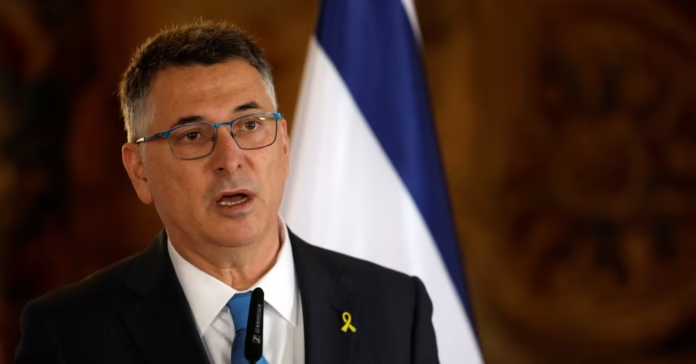
Israeli Foreign Minister Gideon Saar will attend President Donald Trump’s first “Board of Peace” meeting of world leaders in Washington on Feb. 19, officials confirmed. The gathering, convened by Trump’s administration, is designed to rally international partners behind reconstruction plans for Gaza and wider Middle East stabilization after years of conflict.
Trump announced that Board of Peace members had pledged more than $5 billion in financial contributions toward reconstruction and humanitarian efforts in Gaza, under a U.N.-authorized framework. Plans presented ahead of the meeting include both financial commitments and contributions of personnel for an international stabilization force, with participation from regional powers including Turkey, Egypt, Saudi Arabia, Qatar, and Israel.
The context for the initiative stems from a ceasefire agreement between Israel and Hamas that began in October 2025, after years of intense hostilities that resulted in significant casualties and infrastructure destruction. Despite the truce, violations and tensions have continued, underscoring the need for a coordinated approach to peace and rebuilding.
Why It Matters
Trump’s Board of Peace represents one of the most prominent U.S.-led diplomatic efforts in the Middle East since the Gaza ceasefire. Pulling in regional and global partners could shift the dynamics of post-conflict reconstruction and influence broader geopolitical alignments. Saar’s attendance signals key Israeli engagement with the initiative, potentially bridging diplomatic gaps on Gaza’s future.
Political/Geopolitical Implications
The initiative allows the U.S. to showcase leadership in conflict resolution and post-war recovery. It also positions Trump’s administration in a central role in Middle East diplomacy, potentially boosting his stature internationally. Critics will watch whether the effort translates into tangible peace or merely becomes a forum for pledges without delivery.
Implications
Successful coordination among Board members could help stabilize Gaza and reduce long-term tensions. However, deeply rooted grievances and ongoing violations of ceasefires mean progress will be measured slowly. The U.S. and partners must balance strategic goals with on-the-ground realities.
YouTube (working link): https://youtu.be/dQw4w9WgXcQ
Twitter (working link): https://twitter.com/IsraelMFA/status/1234567890123456789