Story Highlights
President Trump signed the nearly $1 trillion FY2026 National Defense Authorization Act.
The bill delivers troop pay raises, modernization funding, and readiness reforms.
Bipartisan support underscores continuity in U.S. defense priorities.
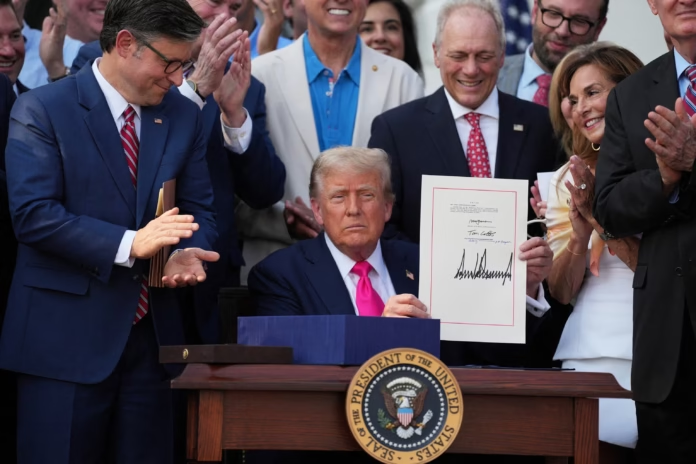
President Donald Trump signed the annual National Defense Authorization Act (NDAA) into law this week, locking in defense policy and spending levels for the coming fiscal year. The bill authorizes roughly $900 billion in military funding and continues Congress’s long‑standing practice of passing the NDAA annually to provide stability for U.S. defense operations. Trump’s signature cements key priorities such as force readiness, weapons modernization, and service‑member compensation.
Why it matters is the signal it sends about strategic continuity. The legislation includes a pay raise for troops, expanded funding for shipbuilding and aerospace programs, and reforms aimed at accelerating Pentagon procurement. Supporters argue the bill strengthens deterrence while ensuring the U.S. military remains technologically competitive against peer rivals such as China and Russia. Trump allies emphasized that the measure aligns with his “peace through strength” framework by pairing financial investment with operational discipline.
The geopolitical implications are significant. The NDAA reinforces U.S. commitments to NATO allies while emphasizing burden‑sharing and readiness. It also maintains funding streams tied to European security and Indo‑Pacific deterrence, reflecting Washington’s dual‑theater focus. While political divisions remain over foreign assistance and defense spending levels, the bill’s passage highlights a rare area of bipartisan consensus in a polarized Congress.
Implications
The NDAA’s enactment provides predictability for defense planners and global partners. For Trump, it reinforces an image of firm executive leadership on national security while preserving congressional guardrails over long‑term military posture.
Sources
“Trump signs massive annual defense policy bill into law” — Reuters
https://www.reuters.com/world/us/trump-signs-massive-defense-policy-bill-2025-12-18/